
Fear of abandonment
The fear of abandonment is a major anxiety linked to the idea that we do not deserve the love of others and that we will quickly be rejected. This anxiety has a significant impact on your life. It causes anxiety and psychological suffering. You sometimes have reactions of isolation, irritability, jealousy, aggressiveness that you do not always understand towards the people you love. A fear of abandonment eats away at the little joys you can have in your daily life.

The main thing to remember
- Fear of abandonment is a chronic and anticipated fear of being rejected or abandoned, with the feeling of not deserving the love of others.
- It often finds its origin in childhood trauma or emotional deficiencies and can be transmitted from generation to generation.
- It generates jealousy, demands, the need for control and self-sabotage in romantic, friendly and family relationships.
- It is frequently accompanied by emotional dependence and comorbidities (addiction, eating disorders, anxiety, depression).
- A therapy focused on self-esteem, autonomy and relaxation allows you to escape this vicious circle.
1. FEAR OF ABANDONMENT, WHAT IS IT?
Fear of abandonment is a fear of being rejected or abandoned. This feeling is a chronic and anticipatory fear of being left or abandoned. When you suffer from a fear of abandonment, you have the feeling of not being loved or accepted.
This sensation creates a feeling of insecurity, with the idea that at any moment, all the people you care about will leave you or betray you. You are helpless in the face of this.
The fear of abandonment is part of emotional immaturity. Indeed, normally we talk about abandonment for children since they need their parents. However, for adults it is slightly different, since they are supposed to be autonomous, and we normally speak for them, rather of breakup.
2. WHAT MAKES YOU EXPERIENCE THE FEELING OF ABANDONMENT?
The feeling of abandonment is a particularly unpleasant feeling to experience on a daily basis, both for the people who suffer from it and for those around them.
When you experience it, you often have very little self-confidence, and you look for love outside of yourself. You have the feeling that you don't deserve to be loved, since you don't see in yourself what can be appreciated. This search for recognition and love can be done with all relationships: whether they are romantic, friendly or even family.
This therefore leads to the use of excessive behavior in order to achieve self-sabotage in your relationships. In fact, you are so afraid of being rejected and are so convinced that you will be, that you do everything to make it happen (conflicts, rejection, etc.). It is therefore difficult to imagine yourself and have concrete plans with someone.
As a result, you have short relationships, and only have very few social relationships. This loneliness makes you sad and creates a vicious circle of this feeling of abandonment.
3. HOW DOES THE FEELING OF ABANDONMENT MANIFEST?
There is no temporality for the appearance of abandonment anxiety. Indeed, it can open at any time in your life, with or without apparent reason. Following a trauma or an event in our life, you can then see this fear appear even though it had never appeared before.
When you are afraid of abandonment, you experience painful romantic or friendly breakups, whether it is a choice on your part or that of the other. Indeed, if it comes from the other side, it reinforces your feeling that you cannot be loved. On the other hand, if you decide to end the relationship, it is because the other person disappointed you and failed to live up to your expectations. According to you, your loved one does not love you enough because it is impossible to love you.
As you experience breakups and rejections, you are afraid of being rejected again and again. This fear is constant, it never leaves you, whatever the nature of the relationship. And each of the relationships you experience is made to compensate for a lack in our life.
Finally, you have high expectations of others. Since you have been disappointed and abandoned in the past, you become more and more demanding of others and this can make life more difficult for those around you.
4. WHAT IS THE ORIGIN OF THE FEAR OF ABANDONMENT?
The fear of abandonment often finds its origin in childhood trauma. Indeed, if certain events may be trivial for some, each person's interpretation of their life events can have consequences on the person. This is why, when we are a parent, it is important to explain everything to our child, even if we sometimes have the feeling that they do not understand. It is essential to tell him what will generate the different phases of his life.
Abandonment anxiety generally has its origins in childhood since it is difficult, when you are young, to manage this anxiety. It then creates afeeling of insecurity in the face of the affection and importancethat we are given.
It is often said that many feelings occur in the first three years of life. It is possible that, during this period, the parents alternate phases of absence / presence, which give the child the impression that he could lose his parents at any moment. However, without this being done formally or consciously, certain life events can shock the child if this has not been explained to them (like going to daycare for example).
If from the first hours of life, a child is separated from his mother at birth for medical reasons, he can experience a real feeling of abandonment or rejection in the face of what he needs most at birth (like any mammal): his mother who allows him to live.
Other more blatant traumas may have been involved in the fear of abandonment such as abuse, emotional deprivation, violence, bereavement, separation, emotional and physical neglect or even actual abandonment. These injuries may have been minimized or gone unnoticed by those around them.
The feeling of abandonment can be transmitted from generation to generation. Indeed, your mother suffered from a fear of abandonment, it is possible that she created a very close relationship with you when you were a child, and therefore each event linked to the separation is experienced particularly difficult by your mother and you.

C2Care, a leader in immersive technologies for mental health
Create your free account to explore over 250 virtual reality exposure situations and subscribe directly online.
5. WHAT ARE THE CONSEQUENCES OF FEAR OF ABANDONMENT ON OUR LIFE?
The feeling of abandonment is difficult to live with on a daily basis, both for you who are experiencing it and for those around you. It taints relationships (romantic, friendly or family) as you need proof of love. The quest for these signs of affection is almost addictive for you. This sometimes becomes difficult for your loved ones to bear.
A feeling of injustice may then arise within you. Indeed, you have the impression of giving a lot to the other, of investing yourself so that, ultimately, this person rejects you.
Your demanding towards others and your very important need for recognition can lead you towards hypersensitivity or even to depression. Having entered a vicious circle, it becomes difficult for you to create new social connections or maintain them.
You experience a feeling of loneliness, you withdraw on yourself, you isolate. Combined with all of this, you seem more irritable and more aggressive toward others and yourself. Your anxiety is growing. Everything becomes a source of anxiety, especially relationships with others.
For children, the feeling of abandonment can be recognized by physical sensations. He will have a lot of difficulty leaving his parents, even just to go to school. You will see him through his cries, his screams, his nightmares at night on weekdays…
6. HOW DOES THE FEELING OF ABANDONMENT MANIFEST?
Every person is different and reacts uniquely to the fear they may experience.
Initially, the anxiety of abandonment is such that the anxiety is significant. You may experience anxiety attacks, be anxious in certain situations, or become stressed more easily.
In addition, you particularly have a lot of doubts, about everything. These doubts are particularly important in all situations, but especially in social relationships. You need approval, and those around you allow you to help you make choices, to reassure you, to ensure that you are making the right decisions... These doubts are generally accompanied by frightening thoughts. You often have the disaster scenario of what could happen in the situation and in particular when it comes to your relationships (betrayal, abandonment, breakup, etc.). You lack self-confidence, you have too harsh judgment toward yourself. You have the feeling that you are so unimportant that you don't deserve the other person and that this person may leave you for someone better or simply realize that you are not good enough for them.
You are looking for particularly fusional relationships, where you and your loved one share everything, do a lot of activities together and never leave each other's side. This person is your resource person on whom everything depends. You see this person as a savior who can get you out of this difficulty. It is therefore not uncommon for the fear of abandonment to be accompanied by an emotional dependence which can be harmful for you.
Certain comorbidities can be accompanied by fear of abandonment, notably addiction and eating disorders (bulimia, anorexia, etc.). In both, we will find here the idea of filling a gap, of filling a void. Addiction also makes it possible to anesthetize sorrow or pain.
Finally, abandonment anxiety can be accompanied by physical pathologies, chronic or not, such as asthma, eczema, spasmophilia, diarrhea, etc.
7. HOW IS THE FEELING OF ABANDONMENT EXPERIENCED IN A COUPLE’S RELATIONSHIP?
Living a peaceful couple relationship when you have abandonment anxiety is complicated. Indeed, you are looking for the ideal partner, the one who makes no mistakes, the one who will never disappoint you. He is there as a savior and will help you get out of this vicious circle of disappointment and breakup. But this is impossible. At the slightest mistake, you will be disappointed and fall back into this circle until you move towards the rupture caused.
The romantic relationship is not balanced. Despite the love that the other person may have for you, you will always see yourself as in a position of victim from which the loved one will rescue you. This makes the couple unreciprocal.
In addition, you seek to have proof of your partner's love, you therefore test your partner regularly, unconsciously or not, in order to see and know when your spouse will disappoint you. It is important for you to have control over everything that happens or can happen. When you can no longer have it, you feel powerless with a great feeling of being misunderstood by those around you.
As this scares you, you are experiencing a paradoxical situation: you need the other but you don't dare let go of your relationship. You keep your distance, you remain withdrawn and solitary. This then makes it more difficult for you to create strong, authentic connections with the person you love. And despite everything, it is difficult for you to separate from the person, even if you feel unhappy within your relationship.
It is so difficult for you to trust, you are so afraid that abandonment or a breakup will happen, you will always be more controlling, more demanding, and put your partner to the test more and more. You are particularly jealous since you think that he or she will be able to find someone better than you and that he (she) risks leaving with it. There are then many conflicts in the couple. You are not always aware of your responsibility in quarrels. Either way, it causes exactly what you fear most: breakup and abandonment.
Finally, you experience great suffering: a heavy feeling of emptiness and sadness. This manifests itself as significant anxiety, panic or even frustration.
8. THE FEELING OF ABANDONMENT IN FRIENDSHIPS
The suffering and experiencing the feeling of abandonment in friendships is similar to what you can experience in romantic relationships. Indeed, the friendly relationship is tinged with jealousy. You demand a lot of attention from them without necessarily daring to ask them, and experience discomfort when your friend pays special attention to another friend.
In the same way as with your spouse, you are distrustful of your friends. You are afraid that they will betray you, that they will reject you or exclude you from your group. In addition, you quickly feel betrayed, and are easily resentful in the face of events that may have occurred.
As a result, you more easily distance yourself from distance because you are disappointed, and can even be aggressive in certain situations that make you feel uncomfortable.
9. AFFECTIVE DEPENDENCE AND FEAR OF ABANDONMENT
A person with abandonment anxiety often has emotional dependence. Emotional dependence is the excessive need for others, generally a partner. This person is going to be a loving presence who will keep you from being anxious, but who is difficult to separate from and who you depend on.
If you are emotionally dependent, you no longer live for yourself, but you live through the other. This is why you continually seek the approval of the other. You are ready to do what pleases him, you are ready to accept a lot from others, even to the point of mistreatment, because you have an emotional lack. You have the impression that you cannot live without this person, and you fear being abandoned at the slightest wave you make.
You feel intense discomfort inside you, physical pain, very significant anxiety and a continual fear of loss. So there is a big relational imbalance that is causing you to suffer. In addition, some unintended people will take advantage of this and risk coming across a narcissistic perverse person.
10. HOW TO MANAGE YOUR ANXIETY IN THE FEAR OF ABANDONMENT?
If you are particularly anxious, and you happen to have panic attacks, here are some tips for managing this anxiety.
First of all, consider relaxation. Become aware of your body, listen to yourself, listen to your needs. Work on letting go, mindfulness. Feel in harmony with your body. Always have a calming place in the back of your mind, a safe place in which you feel good. In this place, you can take refuge whenever you need it. There may be people you love, or you may be there alone. There may be sounds, smells, sensations...Create this space, just for you. Your bubble of serenity and security. Also learn to breathe, calmly, serenely, at a slow but regular pace.
Along the same lines, consider focusing on your physical feelings and senses. Value three things you can see, three things you can smell, three things you can touch, one thing you can breathe, and one thing you can taste. Become aware of all this information that comes into you. become aware of the power of your body to have information and to focus on elements that make you a unique and wonderful being.
It is also very important to work on your self-confidence. Have confidence in yourself and your body. Take a sheet of paper and write down all your qualities. Write down each success you have made and the qualities you used to get there. You have countless qualities, you just need to focus on them rather than your flaws. If at first this is too difficult for you, ask those around you to help you. Ask them to elaborate on the reason why they consider you to have this quality (for example: I think you are determined, because every evening you go to the gym even when you are exhausted).
Get to know yourself
Do activities alone. Motivate yourself to spend time with yourself without being afraid of it. You can do a regular activity where you can meet people (sporting, manual activity, etc.) or even an activity at home that reconnects you with yourself.
Take the time to react during conflicts
When you're upset, do words ever overwhelm your thoughts? You know that you risk regretting your words, hurting them and feeling guilty. Give time to digest what may have been said or done, think about the words you will choose. Avoid reacting quickly.
11. HOW TO GET FREE FROM YOUR FEAR OF ABANDONMENT?
It is possible to free yourself from this fear of abandonment. We must be able to become aware of this fear for better care.
It is important to follow therapy which will allow you to have better awareness by being able to put into words what hurts you, your past story. You will also be able to work on the beliefs you have about yourself, your erroneous thoughts about your image.
Work on self-esteem and self-confidence is also discussed. Indeed, to feel that it is possible to be accepted and to be loved, you must be able to love yourself. And because you feel like you can't be loved, you intentionally or unintentionally cause the breakup. Therapy will be able to help you get out of this vicious circle and learn to be kind to yourself.
In addition, it is important to learn to live independently, and not overestimate the need for others in our lives. Give yourself time to heal, don't be in too much of a hurry, and don't put too much pressure on yourself. So learn to do activities alone, whether they are manual, sporting, or simply learn to find yourself with yourself.
For this, you can also learn relaxation ofmindfulness, sophrology or yoga. This will allow you to take care of listening to yourself and listening to your body, but also to learn to spend time with yourself, and to appreciate yourself. Stop running away from yourself. Remember to take time for yourself, do yourself good (massage, manicure, painting, etc.). Choose to do pleasant things in your daily life where you are the center of attention, and you are aware of it. Enjoy every moment that makes you feel good.
C2Care, a leader in immersive technologies for mental health
Create your free account to explore over 250 virtual reality exposure situations and subscribe directly online.
FAQ on fear of abandonment and virtual reality
What role does the Camille AI assistant play for someone suffering from fear of abandonment?
Camille is an AI assistant that accompanies the patient without judgment during the therapeutic journey. It plays the role of a trusted person in whom you can confide, and you can test it for free to find out how it supports you on a daily basis.
Can the fear of abandonment appear without a specific traumatic event?
Yes, it can open up at any time in life, with or without apparent reason. It sometimes appears following a trauma or a particular event, when it had never appeared before.
What is the difference between fear of abandonment in children and adults?
In children, the fear of abandonment corresponds to a normal need of their parents to develop. In adults, who are supposed to be autonomous, we speak more of a rupture than of abandonment, although the feeling experienced remains similar.
Can the fear of abandonment be transmitted from one generation to the next?
Yes, this feeling can be passed down from generation to generation. If your mother suffered from fear of abandonment, she was able to create a close relationship with you, making each separation particularly difficult for both of you.
What comorbidities are associated with fear of abandonment?
The fear of abandonment can be accompanied by comorbidities such as addiction or eating disorders (bulimia, anorexia), which aim to fill a gap. It can also manifest itself through physical pathologies such as asthma, eczema, spasmophilia or diarrhea.
What is the difference between fear of abandonment and emotional dependence?
Emotional dependence is an excessive need for another, often a partner, who becomes a reassuring presence from whom it is difficult to separate. It frequently accompanies the fear of abandonment, but is not limited to it, and is based on a deep emotional lack.
How to recognize fear of abandonment in a child?
In children, the fear of abandonment manifests itself through physical signs: marked difficulty leaving their parents, including to go to school, crying, screaming and nightmares at night during the week.
Author
C2Care
Related articles

Toltec agreements
The Toltec agreements aim to rediscover freedom and personal well-being, present in ancestral Mexican culture. It was Don Miguel, in 1997, who shared this precious information with us in order to help us feel more in harmony with ourselves.
Pessimism
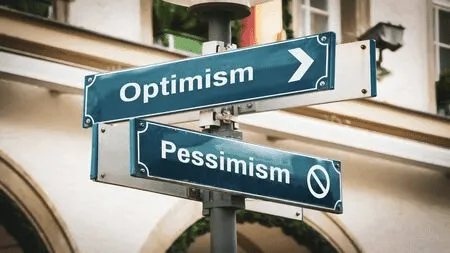
“Stop always being pessimistic!” Have we often repeated this type of sentence to you? Pessimism is something we can all experience at certain times in our lives. However, some of us will be too pessimistic or even maladaptive, which will have an impact on our personal and professional lives.

Fear of insects: a widespread phobia
Extreme fear of insects is called entomophobia and is one of the most common forms of phobia. It causes panic and acute anxiety in victims, but there are effective ways to get rid of it, such as virtual reality, medications, etc. Psychologists offer virtual reality therapies to help their clients overcome this fear by engaging in risky situations in a safe, virtual setting. These specialists use control settings to adjust the environment created by the computer. Complex virtual environments involve replicating aspects of the real world, through 360-degree panorama, 3D graphics and sounds. Children and adults can develop entomophobia, especially when they have previously had hostile experiences with a particular insect. With approximately 6% of the population suffering from entomophobia, C2care provides clients with psychological and medical treatment for various fears, eating disorders, addiction-related stress, and implements virtual reality exposure therapy into their program. Keep reading to understand how virtual reality can help eradicate the fear of insects.

Imposter syndrome
Do you have a feeling of fooling the world around you, whether from a personal or professional point of view? Do you have trouble accepting compliments? Maybe you are prone to imposter syndrome! Although not considered pathological, imposter syndrome arouses a lot of curiosity in psychology. Indeed, it affects a large majority of people who may have this experience at least once during their life.
What is a phobia?
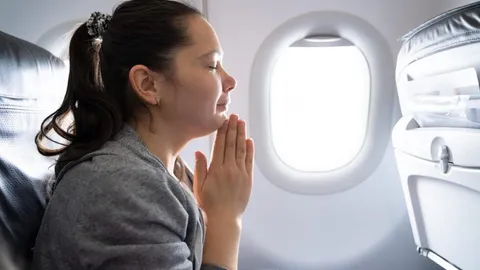
Phobos is the incarnation of fear, he followed his father on the battlefields. The panicky fear that he triggered at the mere sight of him reflects what a person feels when confronted with the object of their fear. There are many phobias and some are more well known than others, including agoraphobia and claustrophobia. On the other hand, aviophobia is less so as it affects many of those who would also dream of discovering fine sandy beaches.

August 31: International Overdose Prevention Day
It is International Overdose Prevention Day. In France, several hundred overdose deaths were recorded in 2022, affecting people aged 15 and over. Drug use is increasing, and both users and dealers are increasingly turning to hard drugs. Those who used to sell cannabis may now also sell cocaine. These drugs have become easier for users to obtain. Drug dealing now includes an on-demand delivery model: the police have noticed that some people have drugs delivered to them. Saving lives by preventing the use of illicit substances has therefore become a priority.