
Pessimism
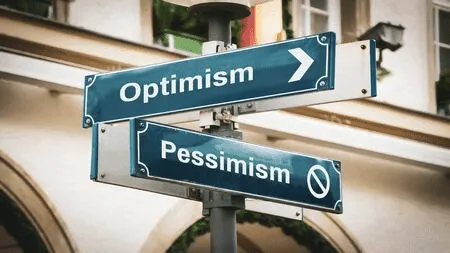
“Stop always being pessimistic!” Have we often repeated this type of sentence to you? Pessimism is something we can all experience at certain times in our lives. However, some of us will be too pessimistic or even maladaptive, which will have an impact on our personal and professional lives.
The main thing to remember
- Pessimism is a learned state of mind, not innate, and can evolve through brain plasticity.
- It is distinguished from realism, which is based on objective facts without judgment.
- It is associated with mood disorders, anxiety disorders and certain health problems.
- Cognitive-behavioral therapies and positive psychology are recommended to reduce it.
- Practical advice helps refocus attention on solutions and the present moment.
1. WHAT IS A PESSIMISTIC PERSON?
Pessimism refers to the state of mind of a person who perceives life in a negative way. Nothing is going well and even if everything is going well at the moment, it won't last.
Pessimistic people will always see the bad side of things around them while completely inhibiting the positive. This is called selective abstraction.
There is a misconception that pessimism is innate. This is false! Pessimism results from the early learning of a functioning and habit of thoughts. So, our brain being (most of the time) well made, there is always possibility to change. Indeed, cerebral plasticity coupled with therapeutic support can help create new thought habits and new behaviors.
Pessimistic people often do not consider themselves as such, but rather consider themselves as being realistic! It is important to differentiate between pessimistic people as described above and realistic pessimists, who will mainly use pessimism in certain situations in order to protect themselves. Indeed, realistic people will anticipate the bad, taking into account objective facts, that is to say without resorting to subjectivity and judgment. This functioning allows them to be able to cope with a negative event or to fully benefit from a positive event.
In summary, where pessimistic people only see the negatives of things even in positive moments of life, the realist, for his part, will be able to see the negative sides and the positive sides of the events of his life.
2. WHAT DIFFERENCES BETWEEN PESSIMISTS AND OPTIMISTS?
To use a well-known expression, the optimist sees the glass half full while the pessimist sees the glass half empty.
The optimist will view the future from a positive point of view, while the pessimist will view it from an extremely negative, even catastrophic point of view. We also find a strong element of pessimism in phobias. In both cases, whether for the optimist or the pessimist, anticipation of the future can be unrealistic or fantasized.
Optimists get better and do better, take better care of themselves. The pessimist(s) believe they are “done.” In other words, optimists will have better health, will present fewer depressive symptoms and you will more easily adapt to situations in order to find solutions to the different problems that arise throughout life.
We often talk about the energy of optimism and the discouragement of the pessimist.
The two are not necessarily opposed. Like everything in life, they are not in the extreme of optimism or pessimism. Positive people are not always optimistic and cheerful about life and pessimistic people are not brooding all day long.
In order to assess pessimism, there is a scientifically validated scale to assess optimist, so you can answer these questions yourself or ask them to your patients:
- In times of uncertainty, I usually expect the best.
- I find it easy to relax
- If there is a chance that things will go bad for me, it will go bad.
- I am always optimistic about my future.
- I really appreciate my friends.
- It's important for me to keep myself busy.
- I almost never expect things to go the way I want them to.
- I don't get angry very easily.
- I rarely expect good things to happen to me.
- Overall, I expect more good things to happen to me than bad
3. DISORDERS ASSOCIATED WITH PESSIMISM:
Pessimism is linked to different disorders. We can in particular find more significant mood disorders, such as depressive symptoms linked to this very negative vision of the world.
We also find a greater comorbidity of anxiety disorders. Pessimistic people will suffer more from phobias, OCD or even generalized anxiety.
Pessimists will tend to always be anticipating the worst.
Studies also show that being pessimistic increases health problems. In particular, people will have a greater risk of death from cancer. There is also an increased risk of developing various pathologies such as Parkinson's disease or major neurocognitive disorders.
4. PESSIMISM THERAPY
As you will have understood, the pessimistic person will always see the negative side of things, which will cause a lot of difficulty in starting new activities. In addition, there will be a reduction in the confidence one can have in oneself, which will lead one to limit one's projects.
Pessimism is not alone, it will also have a strong impact on relationships with others. In fact, the people who come to consult in the context of pessimism mainly come at the request of their loved ones.
The most recommended therapies for pessimism are Cognitive-behavioral therapies and positive psychology.
Be careful, the goal is of course not to live in the world of care bears and see all the life around us in rosy colors.
Here are some tips to reduce pessimism:
- Focus your attention on solutions rather than on problems: When faced with a problem, you have different ways of reacting to it. You may languish over this problem, thinking that fate is coming after you and that you must have suspected it anyway. Or you can say to yourself ok, I have this difficulty, how can I find a solution to this problem and if there is no solution what can I do to minimize its impact on my life.
- Express your negative thoughts only once rather than saying them over and over again. This will prevent your brain from focusing on these thoughts indefinitely and will also have less impact on those around you.
- Check if your predictions come true. If most of the time it fails, wouldn't that be a sign to think differently?
- Help your brain change its perception of the world. To do this, know that your brain does not hear negations. So when you tell him “I must not feel bad”, “I must not get depressed…” to try from time to time to be optimistic. Your brain mainly hears the words "bad" and "depressed." Try to tell yourself the same thing but in a really positive way. IF you shouldn't feel bad, you should feel good!
- Try to be as focused on the present moment as possible. Your brain will lead you to regularly rehash your past experiences (negative of course!) and will make you imagine a catastrophic future. Try to implement small exercises that allow you to refocus on the here and now. There are different possibilities to help with this exercise, including all mindfulness and meditation exercises, etc.
- Practice endurance physical activity!
You will have understood, pessimism is not irreversible. Support in management of emotions and thoughts can gradually help your brain to visualize things differently.

C2Care, a leader in immersive technologies for mental health
Create your free account to explore over 250 virtual reality exposure situations and subscribe directly online.
FAQ on pessimism and virtual reality
Is pessimism innate or can it be changed?
Pessimism is not innate. It results from early learning of functioning and habits of thought. Thanks to brain plasticity and therapeutic support, it is possible to create new habits of thought.
What is the difference between a pessimistic person and a realistic person?
The pessimist only sees the negative, even in positive moments. The realist takes objective facts into account without subjectivity or judgment, and remains able to also see the positive sides of events.
What disorders are associated with pessimism?
Pessimism is linked to mood disorders, including depressive symptoms, as well as comorbid anxiety disorders: phobias, OCD or generalized anxiety. Pessimistic people also tend to systematically anticipate the worst.
What therapies are recommended to treat pessimism?
Cognitive-behavioral therapies and positive psychology are the most recommended. The goal is not to deny real difficulties, but to act on the management of emotions and thoughts associated with pessimism.
Why use virtual reality in the field of mental health?
Virtual reality allows graduated and controlled exposure to anxiety-provoking situations, in a realistic and reproducible environment. It promotes patient engagement and allows personalized care according to their needs.
Do I have access to all virtual environments?
Yes, all environments are grouped into a single application.
Who to contact if there is a problem with the software or headset?
The technical service can be reached via live chat from your control platform. In the event of a headset failure, a diagnosis is made and the defective equipment is replaced within 48 hours if necessary.
Author
C2Care
Related articles

Toltec agreements
The Toltec agreements aim to rediscover freedom and personal well-being, present in ancestral Mexican culture. It was Don Miguel, in 1997, who shared this precious information with us in order to help us feel more in harmony with ourselves.
Cognitive distortions
Every day we must understand the reality around us. All our psychological processes will be activated in the context of different situations: whether decision-making processes, emotions, understanding, evaluation... But these processes can be erroneous and limited by cognitive distortions.

Imposter syndrome
Do you have a feeling of fooling the world around you, whether from a personal or professional point of view? Do you have trouble accepting compliments? Maybe you are prone to imposter syndrome! Although not considered pathological, imposter syndrome arouses a lot of curiosity in psychology. Indeed, it affects a large majority of people who may have this experience at least once during their life.

Positive psychology
Even today, many therapies focus mainly on what is wrong. Thus a lot of knowledge has been accumulated concerning the negative which surrounds humans. But little attention has been paid to the strengths of people that enable them to be in a state of well-being. To get better, it is also necessary to understand what makes you feel good.

Mental health and climate change
You may be wondering what link there may be between climate change and mental health? After all, how can one impact the other? The WHO (World Health Organization) indicates that climate change represents a significant risk for mental health. So in addition to impacting our planet, these changes will have an impact on anxiety, depression, violence and even post-traumatic stress.

assertiveness: communication technique
assertiveness is a major tool of cognitive-behavioral therapy, particularly suitable for patients suffering from social phobia. Finding the balance between expressing your needs and listening to those of others can be learned through precise verbal and non-verbal techniques. Discover, with Dr. Malbos, how to teach these basics to your patients and help them progress using virtual reality.