
What is a phobia?
Phobos is the incarnation of fear, he followed his father on the battlefields. The panicky fear that he triggered at the mere sight of him reflects what a person feels when confronted with the object of their fear. There are many phobias and some are more well known than others, including agoraphobia and claustrophobia. On the other hand, aviophobia is less so as it affects many of those who would also dream of discovering fine sandy beaches.
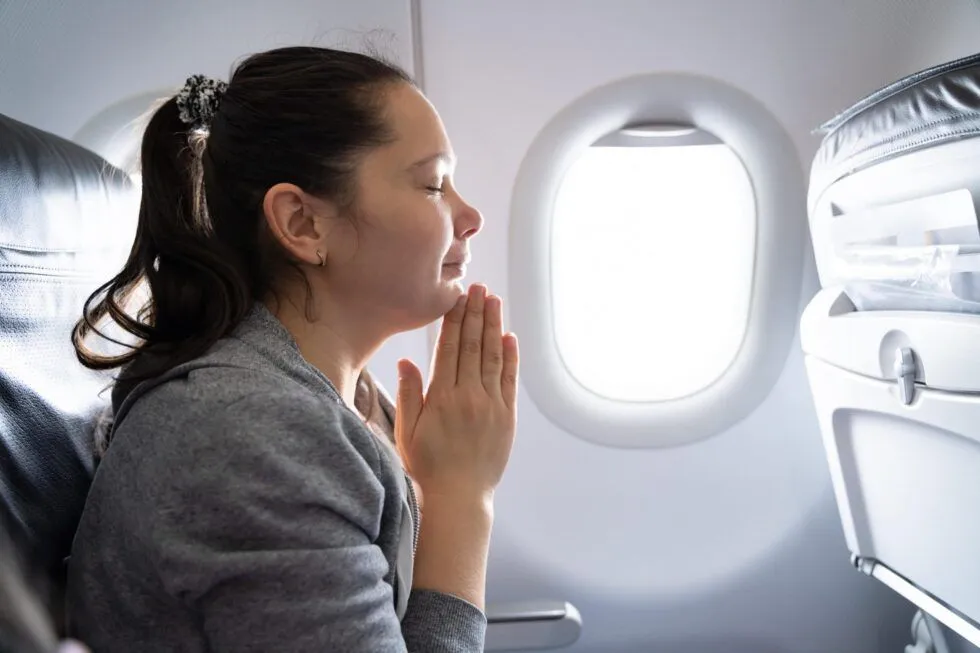
Key takeaways
- Phobia is an intense and irrational fear that prevents you from acting freely.
- Aviophobia (fear of flying) is often combined with agoraphobia and claustrophobia.
- Virtual reality, developed with the APHM in Marseille, allows progressive exposure to feared situations.
- Cognitive-behavioral therapies associated with virtual reality help the patient understand their fears.
- The Camille AI assistant accompanies the patient without judgment during the exposure.
Written by Rodolphe Oppenheimer
October 10, 2016
Phobos is the incarnation of fear, he followed his father on the battlefields. The panicked fear that he triggered at the mere sight of him reflects what a person feels when confronted with the object of their fear. There are many phobias and some are more well known than others, including agoraphobia and claustrophobia. On the other hand, aviophobia is less so as it affects many of those who would also dream of discovering fine sandy beaches.
The particularity of the phobia is that it is often responsible for an “impediment” to life because it forces the person who suffers from it not to do what they would like, to not accede to their desires. It can also be “transmitted” by the anxiety it releases to those around the patient. Thus, aviophobia triggers symptoms that the individual cannot control: fear of dying, feeling of temporary madness, feeling of suffocation, etc. These irrational symptoms, however, have a logic for those who are victims of them. If the plane becomes the object of morbid anxiety, a flying coffin, it is enough to no longer experience this risk so that death does not happen. This logic linked to aviophobia is very often combined with the two other phobias mentioned above, thus becoming hell for anyone who suffers from them.
Virtual reality can help overcome the fear of flying. In the department of Professor Christophe Lançon at the APHM, Dr Éric Malbos and the C2CARE company in Marseille, have created a virtual reality system which allows the patient to confront their phobias, real handicaps to well-being, and to finally have the prospect of overcoming them. When a professional tries to help a patient overcome his or her phobia(s) and in particular aviophobia, it is difficult for him to accompany his patient to airports in order to have him carry out some exercises, as is the case for agoraphobia or claustrophobia.
In the context of Behavioral and Cognitive Therapies (CBT), virtual reality allows the suffering patient to walk around an airport, to gradually confront themselves, without it being too distressing, with what is paralyzing them. These sessions carried out in the permanent presence of a professional allow the patient to dialogue, to analyze what is happening inside them when they are in a situation, without being stuck in a place that terrorizes them. The CBT, the analysis, the support by the virtual reality program allow the complete support of the patient who finally sees himself in a control of these fears, in an analysis of his psyche thus allowing him to understand why these psychological “fantasies” and these morbid mental images occur, and what are the deep reasons.
Being afraid is a necessary condition to protect yourself in the face of danger. But for the supposed danger to become the necessary condition of the individual is not in the order of things. Vacations should remain a pleasant time, a source of pleasure, they should not be anxiety-provoking. Reconditioning the cognitive schema is possible. The help provided by professionals and new technologies must constitute the possibility of regained freedom for all those who suffer. If a revolution is to take place, it must be one that would finally scare Phobos, making him finally, definitively leave the airport tarmac and disappear the fear of flying.
Are you a healthcare professional? Discover our solutions to treat your patients' phobias
Are you an individual? Discover our services to treat your phobia
C2Care, a leader in immersive technologies for mental health
Create your free account to explore over 250 virtual reality exposure situations and subscribe directly online.
FAQ on what is a phobia and virtual reality
How long has this existed?
C2Care has been testing its virtual reality software in hospitals since 2016. The immersive scenarios are developed with partner medical teams, including the department of Professor Christophe Lançon at the APHM, a pioneer in the use of virtual reality against aviophobia.
How is virtual reality used?
The patient wears a headset and moves in a virtual environment reproducing the feared situation, such as an airport. The exposure is progressive and always carried out in the presence of a practitioner, who accompanies the dialogue and analysis of the patient's reactions.
What is a virtual environment?
A virtual environment is an immersive digital scene reproducing an anxiety-provoking situation, such as an airport, an elevator or an enclosed space. The practitioner gradually adjusts the intensity of the stimuli to encourage the patient's habituation.
Can virtual reality be dangerous?
Virtual reality is not dangerous in itself, but it can cause cybersickness in around 10% of people: temporary nausea, disorientation or visual fatigue. The session is always supervised by a practitioner who adapts the exposure if necessary.
What pathologies can be treated in virtual reality?
Virtual reality treats anxiety disorders, including phobias such as aviophobia, agoraphobia or claustrophobia, as well as post-traumatic stress and obsessive-compulsive disorder. It is also used for addictions, mood disorders and cognitive remediation.
Can I feel nauseous while using the headset?
Cybersickness affects around 10% of people using a virtual reality headset: it results in nausea or a feeling of imbalance. These symptoms are generally temporary and diminish with the progression of exposure.
Who can use virtual reality for treatment?
Mental health practitioners, psychologists, psychiatrists or occupational therapists, use virtual reality to support their patients. It is integrated into establishments such as hospitals, clinics, CHU or follow-up care and rehabilitation centers.
Which patients can benefit from a VRET?
Patients suffering from phobias, such as aviophobia, agoraphobia or claustrophobia, may benefit from virtual reality exposure therapy. It is also aimed at patients undergoing cognitive-behavioral therapy who need a progressive and safe confrontation with their fear.
Author
Rodolphe Oppenheimer
Related articles

Gaslighting
Many people suffer from the manipulation of those around them, most often without knowing it. While manipulation takes many forms, gaslighting has recently come to light. But what is it exactly?

Fear of insects: a widespread phobia
Extreme fear of insects is called entomophobia and is one of the most common forms of phobia. It causes panic and acute anxiety in victims, but there are effective ways to get rid of it, such as virtual reality, medications, etc. Psychologists offer virtual reality therapies to help their clients overcome this fear by engaging in risky situations in a safe, virtual setting. These specialists use control settings to adjust the environment created by the computer. Complex virtual environments involve replicating aspects of the real world, through 360-degree panorama, 3D graphics and sounds. Children and adults can develop entomophobia, especially when they have previously had hostile experiences with a particular insect. With approximately 6% of the population suffering from entomophobia, C2care provides clients with psychological and medical treatment for various fears, eating disorders, addiction-related stress, and implements virtual reality exposure therapy into their program. Keep reading to understand how virtual reality can help eradicate the fear of insects.

Workaholism: addiction to work
Workaholism or “boulomania” in French refers to work addiction. Unlike many other addictions, its symptoms such as presenteeism (presence at work even when one should not) or overinvestment in work are often valued in companies, which makes it more insidious and difficult to treat than the majority of addictive disorders. However, as with all addictive behaviors, it exposes affected people to very significant risks for their health (hyperstress, burnout, depression).

My child is afraid to go back to school
Parents and guardians currently considering the choices to make when it comes to reopening schools during the height of a deadly outbreak may have an additional challenge on their hands: children afraid to return to the classroom. Feelings of agitation are common and expected in times of change or transition. This is especially true for children and adolescents returning to school or children entering kindergarten for the first time.

Gray's neurobiological model
Psychoeducation is done during the first group therapy session and consists of explaining the models of anxiety for patients: phobic, who have OCD, or who have generalized anxiety disorders. The models help explain the causes and mechanisms of anxiety, the goal is to help patients understand what is happening in their brains. Ignorance leads to fear. During group therapy, it is important to establish dialogue with patients and to establish an exchange; give patients the opportunity to participate as often as possible. In this article we will see Gray's neurobiological model and its implication in anxiety, phobias and OCD.
What is the impact of Covid-19 on mental health?
The Covid-19 pandemic has had a significant impact on mental health, between fear, isolation and financial distress. This article reviews the main psychological effects of the health crisis and therapeutic solutions, including virtual reality exposure therapy (VRET), to help patients cope.