
Work on your self-confidence
We have all, at one time or another, doubted ourselves or our abilities to complete a task or overcome an obstacle. When this lack of self-confidence begins to become too difficult to overcome and when it handicaps us, limits us, when it builds barriers to our projects or our desires, it is fundamental to take charge of ourselves to improve it. Having confidence in yourself will allow you to achieve great things, and your personal pride will only grow.

The main thing to remember
- Self-confidence is the belief in one's ability to succeed, an essential pillar of personal and professional life that is worked on through repetition.
- It depends largely on the interpretation of our failures: perceiving them as objectives rather than defeats changes everything.
- Lack of confidence often finds its origins in childhood, education, imitation or the weight of negative thoughts (3 thoughts out of 4).
- Untreated, it can lead to isolation, imposter syndrome, depression, addictions, eating disorders or phobias.
- Numerous exercises (lists of qualities, motivating sentences, progressive objectives, exposure) and CBT/VRET allow it to be reconstructed sustainably.
1. WHAT IS SELF-CONFIDENCE?
Having self-confidence means being convinced that you are capable of succeeding, of overcoming an ordeal or of performing a task. To do this, you need to be able to accept certain fears, certain faults and certain qualities that you have and which will allow you to move forward. So it’s your ability to believe in yourself to accomplish any task, no matter how difficult. So it’s not so much the importance of being able to do it, but one’s belief in one’s ability to be able to do it.
This self-confidence is an essential pillar for life, from both a personal and professional point of view.
2. IS HAVING SELF-CONFIDENCE PRACTICAL?
Like any great skill, nothing is magic. So you have to train yourself to have self-confidence. This therefore requires rigor and repetition. You have to be able to bepersistent, continue to believe in it despite the “no’s”, the failures, the difficulties.
It is important to remember that to have confidence in yourself, you have to really believe in it and want it. Indeed, when you do something, the people around you constantly remind you that we are not necessarily capable. It could be a malicious or jealous entourage who wants to put you down with phrases like “you don’t have the level for that”, “what you did was a failure”, and who long for what you are missing. It can also be a caring entourage, who clumsily tries to protect you from disappointment with phrases like “Are you sure you want to do that?” “you don’t have the profile to succeed in this”… And you yourself have your own negative phrases that you repeat to yourself or that come to mind like “I’ll never succeed”, “I’m not capable”, “I’m worthless”…. So don't let yourself be one of these people who are toxic to your success. Remember that your thoughts influence your actions and that you must not let fate choose your path for you.
To do this, you must already start by having the desire. Wanting change, wanting to be different, wanting to have more self-confidence. The path therefore begins with feeling master of your own destiny!
3. SELF-CONFIDENCE, A QUESTION OF INTERPRETATION?
Self-confidence and failure are often closely linked. While others tell you that you are not capable, and that you may have experienced a failure or two, you end up believing what others tell you. You don't feel capable, you think they are right. So you fall into this vicious circle of lack of self-confidence. But the problem is how you react to this feeling of failure or to the task you failed to accomplish, and how you interpret. If you interpret it as a real failure, you will not leave with the same self-confidence as if you perceived it as a new goal. You interpret the feedback you get from the situation, and how you think about it.
Do you know J.K Rowling, the famous author of Harry Potter? Did you know that 12 professionals refused to publish his book before it became one of the most famous sagas of this generation. She could have given up after one refusal, two, or three. After how many rejections will you consider your story a failure? Would you have gone to 13 different publishers? She refused to give up, she believed she could succeed, and she insisted. It is therefore her fight and her desire to succeed that allowed her to become who she is today.
More recently, the Squid Game series on Netflix, which is currently a hit around the world, was also refused by many producers. Dong-hyuk Hwang wrote the script about ten years ago, and the director was faced with production refusals. For 10 years, he continued to believe in it, to today be one of the most viewed series.
You therefore notice that everything is subject to the interpretation of this refusal. If you give up as soon as one person, or two, or more tells you that you can't do it, because you believe what they say, you will have low self-confidence. Make this trust a fight.
4. NO TO NO!
As with J.K Rowling and Dong-hyuk Hwang, both have launched a fight against NO! They did not accept that their mediocrity could be highlighted when they were convinced of their idea or their writing. They had confidence in themselves and in what they had produced. They believed in their ability. They wanted to do what they wanted and start again until they heard a yes!
It was because theypersisted in their projectthat they ended up being successful. This is a good lesson to learn. Being able to listen to comments while keeping the project you have in mind. It is important to keep moving forward, despite the difficulties. Try to find a happy medium between your comfort zone and your potential to go beyond it. Don’t let the no lock you into a comfort zone that prevents you from moving forward. Stop listening to your negative sentences, repeat your positive sentences to yourself. If you need to, write on small pieces of paper that you hang in places where you are sure to see them: in your bedroom, near your bathroom mirror, on your fridge... Have your own positive affirmations, and bring them with you in all your projects.

C2Care, a leader in immersive technologies for mental health
Create your free account to explore over 250 virtual reality exposure situations and subscribe directly online.
5. WHY DON’T I CONFIDENCE IN MYSELF?
There is not one cause, or one reason why you do not have confidence in yourself. On the other hand, there may be certain elements which have created predispositions to this lack of self-confidence.
Childhood injuries
It may be that certain behaviors were developed by what you may have experienced in your childhood. Psychological injuries mark a life and lead to certain anxieties or lack of self-confidence. The feeling of abandonment is one, for example. If you always had to fend for yourself, if you were always confronted with your failures, little valued or little listened to, you may today suffer from this lack of self-confidence.
Education
It is possible that you had an educational system that did not highlight your skills, where you were asked to be excessive humility, or even hide your talents. It is possible that when we do not want to be noticed, we do not try to be noticed and we rely on our failures.
Imitation
When you are young, you tend to use your parents as an example. Indeed, you see the results of what they do and we do the same thing. This is called vicarious learning. If we have parents who are very withdrawn and low in self-confidence themselves, you are more likely to have low self-confidence yourself.
Great competition
When you constantly feel in competition with others, you no longer even look at your own skills. You just want to be better, whether this competition is real or induced. You want at all costs to be above others without trying to measure yourself against people with the same characteristics as you. It’s a bit like trying to beat Usain Bolt in a sprint without training. Make the other person a goal to achieve, ask them for help, and train for it. Failure is part of the learning process. Learn from these difficulties. And pull the other person up with you, rather than feeling happy when that person does worse than you.
The importance of negative thoughts
The brain is not fair in terms of negativity/positivity balance. Indeed, negative emotions and thoughts always have much more weight and impact than positive emotions. In addition, you tend to formulate sentences in your brain in a negative way. Of all the thoughts you have, almost 3 out of 4 thoughts are negative. We therefore cannot get rid of them, we must be able to learn to live with them, to reformulate them, but above all to accept them in order to minimize the impact that it can have on you.
Lacking self-confidence is not necessarily a stable state. Self-confidence can fluctuate depending on circumstances, contexts, situations. So accept that sometimes, lacking self-confidence can happen to you, at any time, any day, any day. However, don't let this define you. Let those thoughts come and go.
6. WHAT BRAIN PROCESSES CAUSE LACK OF SELF-CONFIDENCE?
Lack of self-confidence is a brain mechanism that we can change. To do this, we must be able to understand how this happens in our brain. The amygdala, which is a small part of our brain, is responsible for our emotional feelings and responses. In this circuit, there is the short path, where our brain responds and then analyzes.
The analysis of the situation is carried out by the long route. She analyzes the dangerousness of the situation. Self-confidence works with this same circuit, since together they create a pattern of thoughts.
This thought pattern is often “I’m not capable”, “I’m not going to succeed”. Our brain therefore does not want to start again or already knows that it is doomed to failure. We therefore end up anticipating the outcome of the situation in a negative way. And our brain ends up making failure a learning experience: it therefore only knows one thing: “I am going to fail”, and generates this failure.
7. HOW TO RECOGNIZE A LACK OF SELF-CONFIDENCE?
There is no typical profile for people lacking self-confidence. On the other hand, it is possible to note certain common characteristics.
Guilt
At first, you may feel guilty. Indeed, you have the impression of not doing well enough, of not being a good person in one or more situations. You feel like you're not good enough. You therefore always feel like a failure in these situations, and you tend to put yourself down continually. You live with constant guilt that eats away at you.
Shyness
You don't feel legitimate to be in the spotlight, you have the impression that what you are experiencing or what you are doing must be hidden. You do not dare to assert your thoughts or ideas. You imagine that they are less good or less legitimate than those of others. You give more credence to what others say or think rather than what you want. This generates a great shyness in you which blocks you in some of your projects.
Pessimism
You feel continually dissatisfied, you see everything as being against you. You feel a lot of negativity inside you. You often hear others tell you that you always see the glass half full. However, you have the impression that everything around you has been done to upset you, or that you are particularly unlucky.
Difficulties asserting yourself
It is particularly difficult for you to be able to assert yourself, to say no. You believe that the other person is necessarily more right than you, or that you cannot say no to them otherwise you will no longer be loved by this person. You think that by accepting everything, you will be considered kinder, more helpful and that you will make those around you proud. On the other hand, you hurt yourself and let others come before you. It's time to learn to say no, to assert yourself while continuing to respect your values of help and solidarity if that suits you. Saying no does not mean “being in opposition”, but also allows you to protect yourself.
Indecision
The brain is not fair in terms of negativity/positivity balance. Indeed, negative emotions and thoughts always have much more weight and impact than positive emotions. In addition, you tend to formulate sentences in your brain in a negative way. Of all the thoughts you have, almost 3 out of 4 thoughts are negative. We therefore cannot get rid of them, we must be able to learn to live with them, to reformulate them, but above all to accept them in order to minimize the impact that it can have on you.
Lacking self-confidence is not necessarily a stable state. Self-confidence can fluctuate depending on circumstances, contexts, situations. So accept that sometimes, lacking self-confidence can happen to you, at any time, any day, any day. However, don't let this define you. Let those thoughts come and go.
Anxiety
You often get anxious too easily. In many situations, youimagine the worst. You avoid certain places, certain contexts, certain situations because they make you anxious. You may have some fears or phobias that you don’t understand, that have appeared for no real reason. It may be that your lack of self-confidence is so great that you have developed generalized anxiety, but also other phobias such as social phobia or certain others such as fear of being looked at by others, school phobia, a claustrophobia…
8. WHAT CONSEQUENCES OF LACK OF SELF-CONFIDENCE?
In the professional context
- Missing opportunities
Since you do not dare to assert yourself, step out of your zone of confidence and do not always go beyond your limits, you risk missing opportunities. If your boss talks to you about getting a promotion and sees you in the role of manager to supervise the team you are in, you doubt yourself. You hesitate a lot, you tell him that you are not sure if you are capable of it. Yet the desire to take on this role makes you burn with desire. But by putting obstacles in your way, you make your boss doubt, who understands your hesitation and ultimately gives this role to someone else. You regret having missed this opportunity (and you find this guilt inside you).
- Imposter syndrome
Additionally, you may also suffer from imposter syndrome. You don't feel legitimate to take on this professional role that you have. You have the feeling that you arelyingto everyone at your job, and that you are hiding the dark secret of your incompetence. You therefore become even more anxious about going to work, and risk burn out or ergophobia.
In the relational sphere
You don't understand how anyone can appreciate you or even love you. You don't feel very handsome, you don't find yourself particularly funny, you don't find yourself particularly intelligent and you have the impression that you have nothing that could attract others, whether in friendship or love. When you look at others around you, you always see their good qualities, and you understand why they can appreciate them so much.
You will therefore encounter social difficulties or feel isolated. Indeed, when you are part of a group or in a relationship, you have the impression of being too many, that you cannot be appreciated, and that at any moment you are going to be rejected. It is therefore difficult to get attached, because you always have this voice inside you that screams “to get attached is to hurt yourself, this relationship cannot last”, “you cannot be loved”. You will see all the clues that make you feel excluded. You will interpret everything in this way. By going in this direction, you self-sabotage, and involuntarily create your exclusion from the group or the friendly or romantic breakup. This sets you up for failure and worries you about possible future relationships that you no longer want. You no longer dare to enter into a relationship, since you have assimilated them as pain.
- In privacy
Therefore, when you are in a relationship, it generates in you a strong fear of abandonment. You keep in mind all those relationships that didn’t last. It is therefore increasingly difficult for you to dare to fall in love or form a relationship. And if you agree to take the risk of this relationship, you can sometimes suffer from difficulties in your intimacy, sometimes even going as far as sexual phobia.
It is even possible that your lack of self-confidence prevents you from seeking new relationships. So you stay with people who may be malicious or bad for you. However, you are so afraid of being alone and of abandonment that you prefer to cling to this person at all costs. This is how you sometimes stay in a relationship that is toxic for you. Your lack of self-confidence can prevent you from seeing that you are in a relationship with a narcissistic pervert. And you won't leave him/her, because you don't feel worthy of having someone better. You think no one else would want you.
In personal activities
It is difficult to get involved in an activity when you have in mind that you are not good enough at it, that you will fail, that you will never have a good level. You then enter avicious circle of failure. Indeed, as you see yourself as being bad at this activity, you assume that, no matter how much energy you put into it, you will fail. You are therefore not going to give the best of yourself and find yourself, indeed, in failure.
In addition, you will have in mind that you cannot do it because one day, you did a similar activity and you failed. So you won't even try to do the exercise anymore. Take the example of sport: You give yourself the goal of running 10 km in 40 minutes. However, you run for the first time and struggle to finish the 10 km. The second time you run and you manage to run 10 km. So on for 7 races. At the end of the 8th race, you run the 10 km in 55 minutes. Rather than continuing to set yourself goals, you tell yourself that it's impossible, that you'll never achieve it, and give up on the race.
The risk now becomes the generalization of the negative idea that one has of oneself in other areas which are no longer linked to sport. You will tell yourself that, as you have not achieved your sporting objective, you will never succeed in what you undertake, and that sport is only the image of all your other failures. This generalization is particularly harmful since it leads to an abandonment of certain activities and prevents you from trying new things that could help you flourish.
So, this causes you a lot of frustration, and a constant feeling of mediocrity that puts you in difficulty. The inner pain that this feeling can give you will be accentuated by the fact that you are afraid of disappointing those around you, of being judged by your failures, of not living up to what might be expected of you. You are therefore not making progress in your projects and towards your objectives. All of this is holding you back.
9. WHAT ARE THE RISKS TO MY HEALTH WHEN I LACK SELF-CONFIDENCE?
Addiction
When your lack of self-confidence is no longer temporary, when it poisons you in your daily life, one of the possible complications is addiction. Indeed, the addictive substance (tobacco, alcohol, drugs) or addictive behavior (gambling, sport, pornography, etc.) can be reassuring for you. You reproduce a pattern that you know, you do not leave your comfort zone, and yet, you have created, involuntarily, a reassuring sphere. Reassuring, certainly, but also particularly harmful for your health.
Depression
You do not feel, or no longer, able to rely on your skills and on yourself. The focus you put on your failures affects your morale. In the longer term, you feel like you're missing out on everything. You have the feeling that you can no longer achieve anything, and that everything you do is doomed to failure. Obviously, you feel demoralized and no longer want to do anything. So you have no more energy, and you feel incompetent and weak. Depression is one of the important and common consequences of low self-confidence.
Emotional dependence
Being loved for who you are and what you do just seems impossible. When someone becomes attached to you, you think directly about the fact that this person is going to leave you, and will abandon you. You think you cannot deserve love, affection. If someone loves you, you think it's because they haven't yet been able to see what was bad about you because you hid it, but as soon as they realize it they will leave. When you're in a relationship, you absolutely need each other. You think you can't live without them. You think he or she is the only person who will want you. You think that if she leaves you you will be nothing. You only live through this person. This emotional dependence makes you suffer. You must therefore learn to trust yourself and believe in your abilities to be able to live independently.
Eating disorders
You don't like your body, you don't feel comfortable in it, you can't manage your emotions and how you feel.
From then on, you may start trying to calculate all your foods, eating less, depriving yourself, making yourself vomit, trying to have control over your BMI, etc. You may fall into anorexia in order to feel like you can control and manage yourself.
Conversely, you suffer so much from this lack of self-confidence that you cannot manage your emotions and your desires. You therefore consume food impulsively, you have hyperphagic attacks and you may feel all the more incapable of not knowing how to manage yourself. This bulimia can therefore reinforce your lack of self-confidence, and you no longer feel comfortable in your body. You would like lose weight but you can't do it.
In these circumstances, it is important to understand your relation to food to be able to best estimate how you stand in relation to this.
Phobias
Lack of self-confidence can lead to the development of certain phobias or anxiety (which you may learn to manage) . There may be a direct link to this lack of self-confidence, or there may not be any apparent one.
For example, you may suffer fromagoraphobia because you would feel incapable of knowing how to react alone in certain places. The gaze of others can also be so difficult for you to manage that finding yourself in a crowd worries you and you develop an ochlophobia. In the same way, the public speaking are difficult for you since it is impossible for you to ignore the judgment of others, and you absolutely want these people not to see that you are worried, and they judge you negatively. All this can also be complicated to the point of a disorder of thegeneralized anxiety.
10. HOW TO IMPROVE MY CONFIDENCE?
To improve your self-confidence, you can follow the following tips or do the following exercises. Choose those that suit you, that reassure you and that you like. Above all, start by telling yourself that today you decide to accept change and work on this lack of self-confidence.
Everything can change
The first lesson to learn is to know that nothing is irreversible. Not everything will be done the way we originally planned, but it's important to remind our brains that we can always right our mistakes. Thinking about this puts you in a position where you no longer endure what happens to you, but rather feel ready to tackle obstacles head on, even when we feel like we've made an irreparable mistake.
Let's take the example of a job interview that went very badly because you said a sentence that could have been misinterpreted by your potential future employer. You tell yourself that that’s it, you missed this opportunity that you like so much. You therefore have several possibilities to avoid dwelling on this failure and telling yourself that you are incapable. You can either call the employer and explain yourself. Be yourself, be sincere, you have nothing to lose. You can also learn lessons from it for future interviews, and this experience will have allowed you to move forward.
Be yourself
It’s a phrase that may seem corny and that we use easily. You've probably heard it before, and maybe even said it, and yet, it doesn't work that easily. However, you really have to feel the intensity behind this thought. You have abilities, qualities, faults, certain difficulties, but it is all part of you. What you consider to be a quality is not necessarily the case for another person. you can do the test with those around you. Ask them what qualities they highlight when they meet people, you will see that no one has the same ones. You may even say to yourself that if your neighbor, Paul, really likes organized people, you can't stand being with someone who is too organized because it seems boring to you. The quality of one may be the fault of the other. And yet you will be able to appreciate all these people for who they are. So it is the same for you.
So don't try to imitate someone you're not, or the qualities of others that seem good to you. Indeed, you will not be able to be yourself, you will create a dissonance between who you really are and what you present to others. This will therefore not hold, you will not flourish, and you will set yourself up for failure, particularly in social relationships.
Make a list of your qualities
When we experience failure, whether real or imagined, it is difficult for you to see your qualities. You tend to highlight what could have caused you to fail in this situation. And, more and more, you only see your faults. It’s time to reverse the trend and turn to the positive. So make lists that you have easy access to. Write down all your qualities, all your pride, all your successes. When making this list, don't leave room for negativity. Think only positive. You can even talk about it around you and ask others what qualities they think of you, what successes you have that have impressed them. In all obstacles but even on a daily basis, remember these qualities which will take you to the end of your objectives.
Once the list is made, you can even do the exercise in front of your mirror. Talk to yourself and tell your reflection all these qualities that you have, how impressive you find yourself to have succeeded in overcoming such ordeal, how strong you feel, and highlight the characteristics of your personality that you have mobilized to succeed in this. do this very regularly, and you will quickly see a change in your self-confidence.
When you talk to your reflection, learn to forgive yourself. Forgive yourself for your mistakes, forgive yourself for what did not satisfy you, forgive yourself for not having reacted as you would have liked, for having missed something that was important to you. Once you have forgiven yourself, try to understand what lesson you can learn from this ordeal or obstacle to better progress. A mistake is of no use except to move forward even better and more easily next time. So no longer perceive the failure but the lesson to be learned from it.
Create motivating sentences
Suggesting positive ideas to ourselves allows our brain to adopt positive and motivating ideas. In essence, we want to prove ourselves right. This is why, if you repeat to yourself every day that it is impossible and that you are not going to succeed, there is a greater chance that you will not succeed. But on the contrary, if you give yourself positive and motivating phrases, you will find the strength to achieve this objective and goal. These slogans are short, easy to repeat and remember. You only need one or two to accompany you in all moments of doubt. And repeat it again and again, around twenty times a day and even more in difficult times.
Divide your goals into parts
The most important thing is to set achievable goals. If you decide to run a marathon, you cannot wake up one morning and say to yourself “Today I am running more than 42 km”. It takes some training to do this. This training must be in line with your abilities and your current physical condition. Always try to surpass your comfort zone, while being in an environment where you are capable. If the training is not adapted you will have a permanent feeling of failure because you will have the impression of not achieving what you had set out to do. Whereas training is “start again”, “start again” over and over again.
It is also important that you accept that your condition is not always the same. You may be particularly tired., that you have trouble concentrate today, whether it's very hot or very cold, whether you're feeling down, etc. Define or redefine your goals according to you at the moment.
Learn to say no
To improve your self-confidence, it is important that you can assert yourself. Don’t always try to put others before yourself. You forget yourself, you lose yourself. You no longer know what you want for yourself, but you do it based on others. Don't necessarily be resistant to everything that is asked of you, but try to say no if you really don't want to. The first step here is to understand what you really want. Listen to yourself, listen to your needs and desires. To do this, you can use the non-violent communication or certain exercisesassertiveness.
Don't take everything against you
As stipulated in the toltec agreements, it is important to do not make all external elements a personal matter. Turn your attention to others, and no longer just to yourself. If you failed at something, it is not necessarily because of you, but perhaps because there were other external elements that came into play.
Life is made of random elements, where we must succeed in shaping ourselves according to everything that surrounds us. So remember that everything is not done against you, or for you. If you confess your feelings to someone you love, and that person doesn't respond in kind to your advances, it's not because of you.
He may think that your values, characters and personalities are not aligned and that the relationship risks hurting you further. Maybe he's not emotionally ready to open up to you either? He doesn't say no, just to be against you.
Dare
The essential step in evoking change is to dare to expose yourself to situations that may be difficult for you, and force yourself to go beyond your comfort zone. In a progressive approach, give yourself simple exposure objectives and give yourself these small challenges. You can even create games with your friends. Dare to go talk to strangers, dare to take off your makeup mask to go to the supermarket, don't shy away from people's attention and force yourself to look the people around you in the eyes.
Don’t forget: list your pride, highlight what you have achieved and the challenges you have overcome. You can be proud of yourself. No exposure is too small, the most important thing is to have dared to do it.
Highlight the positive
As you may have read previously, negative emotions always take up a considerable amount of space in our minds compared to positive emotions. Just of the emotions that we can feel, out of the 4 main emotions, 3 are “negative”: Fear, anger and sadness, compared to 1 positive which is joy. It is therefore easier to highlight what hurts you, what makes you sad, or what makes you angry rather than noticing what makes you feel good. But it takes practice, and you will see that by paying attention to what is positive, your brain will focus more on that.
This is why, take a notebook, in which, every day you write 3 positive things that happened to you during the day. It can be something big like a meeting, but also “smaller” elements that we are less used to highlighting: good weather, a good meal, a good night, the cleanliness of a place… Train your brain in positivity!
Accept compliments
Allow yourself to hear the compliments that people give you, and really take them personally. If one of your friends tells you that she thinks you look radiant today, don't try to make excuses by saying that it's your new dress or the new T-shirt that suits you, that it's your tan or a good night's sleep. Just say “Thank you.” Don't apologize for receiving certain compliments, don't be sorry or feel embarrassed because it made you stand out. It is the same for what is intellectual. Following a presentation you had to make, your manager tells you that you did really well. Don’t try to blame this success on other people or the public, but you too can feel it and be proud of it.
However, it is important that you do things for yourself, and not to expect recognition from one or more people. Just take the compliments they have to offer.
Understand to help yourself better
It's important to understand what your lack of self-confidence is highlighting. First, ask yourself in under what circumstances this lack of self-confidence is particularly strong or particularly handicaps you. Try to see what this represents in you: Is it a fear of abandonment? Is this trauma? Is this your upbringing? Phrases that have been repeated to you? Also try to understand in whichareathis affects you the most and what mainly handicaps you in the professional world because you are unable to evolve? In your friendly relationships that you cannot keep? In your romantic relationship that doesn't satisfy you?
Take the time to think and answer all these questions to better move forward and accept what you may be feeling. The goal here is not to punish you, to hold grudges against certain people or to feel guilty. From there, you will be able tofind the most suitable solutionsto restore your self-confidence and improve self-assertion.
11. WHAT THERAPIES FOR LACK OF SELF-CONFIDENCE?
The Cognitive-Behavioral Therapies (CBT) are the therapies the most effective for improving and working on your self-confidence in an appropriate and rapid manner. This therapy will allow you to work on the demeaning thoughts that you may have, on your dysfunctional automatic thoughts, on your cognitive distortions. The aim of this monitoring will therefore be to make cognitive restructuring. The principle of cognitive restructuring is to change negative and dysfunctional thoughts into positive, realistic and functional thoughts.
You will also ididentify the source of your lack of confidence and understand from what sphere it can come according to the Maslow's hierarchy of needs. The therapist will be able to help you highlight expressing your needs in different situations in order to no longer transcribe this need in a lack, but to externalize it to respond to it. These exercises will also help you learn to express what you feel in an appropriate way thanks, in particular, to the assertive communication.
It is therefore in this dynamic that the Virtual Reality Exposure Therapies (VRET) intervene. In fact, the VRET are part of the CBT and allow exposure to situations in a gradual, safe and controlled manner. Exposure training is not violent, since you will be able to be submerged in a 3D environment that recreates the same neural connections as reality. So you will feel safe to start exposure situations and face your anxieties and your lack of self-confidence. During these therapies, the psychologist who accompanies you will help you to experience situations differently. You will work directly in the situation changing your thoughts. You will be able to learn to perceive situations according to their context and learn to receive feedback according to our interpretation, but also according to the point of view of others.
C2Care, a leader in immersive technologies for mental health
Create your free account to explore over 250 virtual reality exposure situations and subscribe directly online.
Frequently asked questions about self-confidence and virtual reality
What exactly is self-confidence?
Self-confidence is the belief in one's ability to succeed in a task or overcome an ordeal, regardless of the difficulty. It is not so much the fact of being capable as the conviction of being capable. It constitutes an essential pillar of personal and professional life.
Can you really work on your self-confidence?
Yes. Like any skill, self-confidence is trained through rigor and repetition. It requires persistence in the face of failures and difficulties, and begins with a real desire for change and the feeling of being master of one's destiny.
Why do I lack self-confidence?
There is no single cause. Certain elements create predispositions: injuries in childhood, an education that values excessive humility, imitation of insecure parents, a climate of permanent competition or the weight of negative thoughts, which represent approximately three out of four thoughts.
What are the consequences of a lack of self-confidence?
It can lead to missed professional opportunities, imposter syndrome, relationship difficulties and isolation. In terms of health, it promotes addictions, depression, emotional dependence, eating disorders and certain phobias.
How to improve your self-confidence on a daily basis?
Several exercises help: making a list of your qualities and successes, creating motivating sentences, dividing your goals into achievable steps, learning to say no, accepting compliments and gradually exposing yourself to uncomfortable situations. The main thing is to focus on the positive.
What therapies are effective against lack of self-confidence?
Cognitive-behavioral therapies (CBT) are the most effective. They work on cognitive restructuring, that is to say the transformation of negative thoughts into realistic and functional thoughts, in order to identify and treat the source of the lack of confidence.
How does virtual reality help you regain self-confidence?
Virtual Reality Exposure Therapies (VRET) is part of CBT. They allow graduated, secure and controlled exposure to anxiety-provoking situations. Immersed in an environment recreating real conditions, the patient works on modifying his thoughts in complete safety.
Author
C2Care
Related articles

Fear of abandonment
The fear of abandonment is a major anxiety linked to the idea that we do not deserve the love of others and that we will quickly be rejected. This anxiety has a significant impact on your life. It causes anxiety and psychological suffering. You sometimes have reactions of isolation, irritability, jealousy, aggressiveness that you do not always understand towards the people you love. A fear of abandonment eats away at the little joys you can have in your daily life.

Imposter syndrome
Do you have a feeling of fooling the world around you, whether from a personal or professional point of view? Do you have trouble accepting compliments? Maybe you are prone to imposter syndrome! Although not considered pathological, imposter syndrome arouses a lot of curiosity in psychology. Indeed, it affects a large majority of people who may have this experience at least once during their life.

Assertive communication
These days, communicating well is an essential skill. First of all, it is transversal and affects absolutely all areas of our lives. But above all, contemporary means of communication mean that we tend to be in continuous contact with others (via social networks in particular). Consequently, our ability to exchange and express our emotions as well as our ideas in a way that is healthy for ourselves and for others becomes essential for our well-being. This is precisely the purpose of assertive communication.

assertiveness: how to receive criticism and react to mockery?
Sensitive to criticism and mockery, social phobic patients, like many others, can be easily hurt. However, there are concrete techniques for learning to receive criticism, formulate it, and react to mockery without suffering from it. Overview of Dr. Malbos' methods to pass on to your patients to strengthen their assertiveness.

Cognitive distortions
Every day we must understand the reality around us. All our psychological processes will be activated in the context of different situations: whether decision-making processes, emotions, understanding, evaluation... But these processes can be erroneous and limited by cognitive distortions.
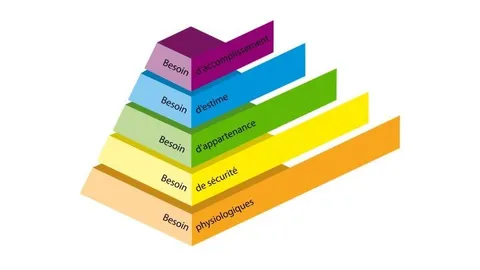
Maslow's Hierarchy of Needs
What if your own development was not only dependent on you but on the fundamental needs present for every human being? What if understanding your needs made it easier to get closer to a feeling of well-being? Learn about Maslow’s hierarchy of needs.