
Vicarious learning
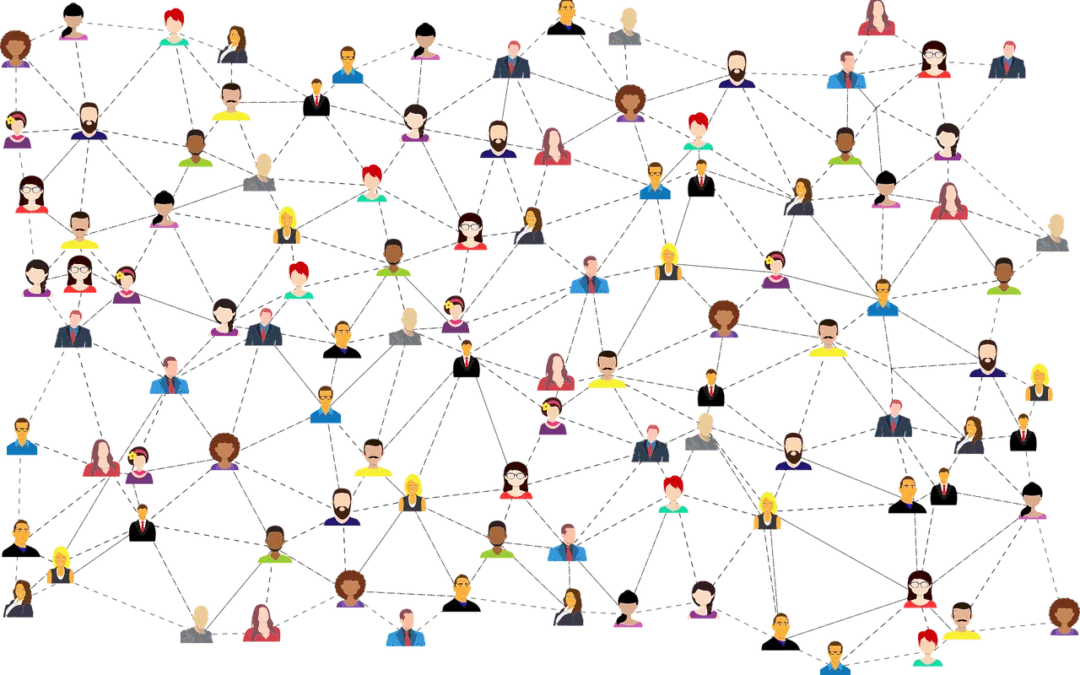
The other has an impact on us, and we have an impact on him. Vicarious learning, or modeling, refers to the imitation of behavior observed in our peers, without going through trial and error. Theorized by Albert Bandura, this mechanism shapes our acquisitions since childhood and plays a key role in education as well as in reducing anxiety. Deciphering this essential driving force of social interactions.
Key takeaways
- Vicarious learning refers to the imitation of behavior observed in others, without going through trial and error.
- Also called modeling, it is based on attention, memorization, reproduction and motivation.
- Theorized by Albert Bandura in 1986 within the framework of social learning theories.
- It plays a key role in education: acquisition of behaviors, suppression of dysfunctional behaviors, reduction of anxiety.
- It can also be toxic if the patterns observed are malicious.
1. WHAT IS VICARIANT LEARNING?
Vicarious learning is the imitation of a behavior following observation of the behavior of our peers.
We consider the results of certain actions carried out, and see their success thanks to the behaviors highlighted. They therefore seem to be, in our eyes, consciously or unconsciously, necessary to imitate. And we adhere to them because they offer results that correspond to our expectations or our values (like leadership for example). In this way, we avoid accumulating trials and errors, which others may have done before us.
2. WHAT DEFINITION FOR VICARIANT LEARNING?
Vicarious learning can also be called “modeling”. Indeed, we imitate the behaviors that we have observed in people who we consider as models in a field.
Observation is therefore not passive, unlike mimicry. Actively, observation goes through several dimensions: attention, memorization, reproduction and motivation.
In this type of learning, the observed behaviors have proven successful, and we want to apply the same to obtain the same successes.
3. WHAT THEORETICAL CURRENT?
Vicarious learning was born according to social learning theories, in 1986, by Albert Bandura. With a cognitive-behavioral orientation, Bandura realizes that we cannot live without considering the surroundings, whether it is our family, our culture, etc. We always live with them, and whether we like it or not, learn from them.
Social learning theories then consider human actions as resulting from three factors: cognitions, behaviors and environmental context.
4. WHAT ROOM FOR OUR OWN EXPERIENCE?
It is not because we learn by imitation that our own experience should be neglected in this type of learning. Indeed, based on our own experiences, we constantly adjust our behavior according to what we have experienced. Some may have been failures, so we try to analyze the successful experiences of others in those that put us in difficulty.
This is what we consider to be the symbolization of our experience. In this way we learn to communicate better, to better anticipate possible difficulties, to better imagine the future and our own actions. Vicarious learning is therefore not mimicry since it ultimately considers the interpretation we have of the result of the other's behavior.

C2Care, a leader in immersive technologies for mental health
Create your free account to explore over 250 virtual reality exposure situations and subscribe directly online.
5. VICARIANT LEARNING IN EDUCATION
We have experienced vicarious learning since birth. Indeed, we imitate the behaviors and actions of our parents. Indeed, this learning brings several benefits to the child, adolescent or adult.
Firstly, he can learn new behaviors that he has not yet acquired. He will be able to observe, train and appropriate it in his own way.
Secondly, he can remove certain behaviors that seem to be dysfunctional. Indeed, if he sees that a fairer reaction to a situation allows the person to flourish more, he will try to acquire the same.
Finally, this type of learning helps reduce anxiety or phobias. We observe our loved ones facing situations that are anxiety-provoking, but their behavior seems entirely appropriate and fearless. We will then imitate these same behaviors and reduce our own anxiety.
6. LEARNING HAPPENS ALL AROUND US
Vicarious learning is not limited to imitating the behaviors of our family members. It goes way beyond that. It comes from our culture (our peers, sharing the same value, ideology, religion, etc.), from books, from the media (television shows, radio), from influential people (president, Nobel Prize winners, etc.), from our comrades, from our establishment (teachers, educators, etc.).
School is a great source of vicarious learning. Indeed, the teacher talks about his experience, shows exercises and methods for success, and the student will only have to apply it to succeed in a similar exercise.
Imitating behavior can be done in all contexts. The closer the person is to their source of influence, the more quickly the behavior will be accepted. However, even if he does not know it personally, a person can consider a distant model.
This is why, like any type of learning, it can be known to be toxic depending on our sources of inspiration. Malicious people can use the vulnerability of certain others to get them to adopt behaviors that will be considered successful.
7. USE THIS LEARNING AS AN ENGINE
Now that you are fully aware that the behavior of others influences you, embrace it. Observe the behaviors of people you consider successful, analyze and interpret this success. Ask yourself what could be right for you, and what you will be able to put in place to be able to achieve your goals. It’s not about “copying” your peers, or losing who you are to become who they are. This is about appropriating behaviors that could be useful to you, and using them according to your own personality and your own experience.
C2Care, a leader in immersive technologies for mental health
Create your free account to explore over 250 virtual reality exposure situations and subscribe directly online.
Vicarious Learning FAQ
Why use virtual reality in the field of mental health?
Virtual reality allows graduated and controlled exposure to anxiety-provoking situations, in a secure and reproducible setting. It promotes patient engagement through customizable immersive environments, and covers various disorders: phobias, post-traumatic stress, obsessive-compulsive disorders, addictions, mood disorders.
Do I have access to all environments?
Yes, all environments are grouped into a single application. You thus access the entire catalog without changing software, which makes it easier to adapt exposure sessions according to the patient's needs.
Who should I contact if I have software problems?
The C2Care technical service can be reached via live chat from your control platform. In the event of a hardware problem, a diagnosis is made and then, if necessary, the defective equipment is replaced within 48 hours.
What pathologies can be treated in virtual reality?
Virtual reality is used in the treatment of anxiety disorders (phobias, post-traumatic stress, obsessive-compulsive disorders), addictions, mood disorders, and in cognitive remediation.
Can I feel nauseous while using the headset?
Some people may experience cybersickness, a sensation similar to motion sickness linked to immersion. This phenomenon affects around 10% of people and generally remains limited in time.
Who can use virtual reality for treatment?
Practitioners such as psychologists, psychiatrists and occupational therapists use virtual reality in exposure therapy. This approach is integrated into establishments such as CHU, hospitals, clinics or EHPADs.
Which patients can benefit from a VRET?
Virtual reality exposure therapy is aimed at patients suffering from anxiety disorders, phobias, addictions or cognitive disorders. The practitioner determines, depending on the clinical situation, whether this graduated exposure is appropriate.
What is a virtual environment?
A virtual environment is an immersive scene reproducing a realistic context, such as a plane, a crowd or a spider. The patient is exposed to it in a graduated manner, in a controlled setting, to work on his anxious reactions.
Author
C2Care
Related articles

Therapy ACT
In mental health and in the context of psychotherapy, one element often comes up as a source of suffering: the need for control, and the distress it brings when, inevitably, certain elements escape this control, which can lead to a feeling of helplessness. The ACT is one of the tools to overcome this difficulty.

Imposter syndrome
Do you have a feeling of fooling the world around you, whether from a personal or professional point of view? Do you have trouble accepting compliments? Maybe you are prone to imposter syndrome! Although not considered pathological, imposter syndrome arouses a lot of curiosity in psychology. Indeed, it affects a large majority of people who may have this experience at least once during their life.

Emotional intelligence
Have you ever taken your stress or anger out on someone when it didn't come from them? Knowing how to accept and correctly manage your emotions is proof of emotional intelligence that is fundamental to success.

Self-determination
What if completing a task didn't depend solely on you? What if your personality was governed by fundamental psychological needs and responding to them leads you to personal fulfillment? Being self-determined means being able to respond to a feeling of freedom, interest, valuation and acceptance at the same time. Self-determination is then fundamental to our well-being.

Autism Spectrum Disorder
Autistic disorder, Asperger syndrome, Heller syndrome, Pervasive developmental disorder not otherwise specified: since the DSM-V all these qualifications have been grouped under the name ASD – Autism Spectrum Disorder. Is it a disease? What are the different shapes? How to detect it? Let's take stock of this disorder, which is still poorly understood today and which gives rise to a large number of questions and false beliefs.

Work on your self-confidence
We have all, at one time or another, doubted ourselves or our abilities to complete a task or overcome an obstacle. When this lack of self-confidence begins to become too difficult to overcome and when it handicaps us, limits us, when it builds barriers to our projects or our desires, it is fundamental to take charge of ourselves to improve it. Having confidence in yourself will allow you to achieve great things, and your personal pride will only grow.