
Self-determination
What if completing a task didn't depend solely on you? What if your personality was governed by fundamental psychological needs and responding to them leads you to personal fulfillment? Being self-determined means being able to respond to a feeling of freedom, interest, valuation and acceptance at the same time. Self-determination is then fundamental to our well-being.

Key takeaways
- Self-determination theory, developed by Deci and Ryan, explains human motivations.
- Three fundamental needs make it up: autonomy, competence and social relationships.
- The more these needs are satisfied, the more motivation and commitment increase.
- Motivations follow a hierarchy, from amotivation to intrinsic motivation.
- Changing your motivations is possible, but moving from extrinsic to intrinsic remains difficult.
1. WHAT IS SELF-DETERMINATION THEORY?
Self-determination theory comes from the psychology of motivation which was established by Deci and Ryan, two psychology professors, in the 2000s. Self-determination is a theory on human motivations to complete a task. It is particularly used to understand the motivation of people in companies, schools, or even in activities. In other words, it is self-determination that will govern almost all of our lives.
2. WHAT ARE THE MOTIVATIONS FOR SELF-DETERMINATION?
These human motivations come from three fundamental psychological needs of human beings: the need for autonomy, the need for competence and the need for social relationships.
Need for autonomy
The need for autonomy is the fact of being able to be master and at the origin of one's actions. It is being able to live, fully and consciously, in a chosen way, one's experience. To truly be what we want them to be, our actions must be able to respond to our values. However, they take the environment and our surroundings into consideration. Being autonomous also means being able to take responsibility for the decisions that have been made.
Autonomy allows us to have control of our life, and not let others direct our lives.
Need for skills
The need for competence is to be able to be efficient, and to continually increase the level of difficulty of the tasks that one has to carry out. It highlights fundamental efforts to overcome a challenge or task. We are constantly seeking to implement our knowledge, but also to go beyond to meet higher capabilities. The need for competence is therefore either to reduce the difficulty of the task or to increase one's personal skills.
The fear of failure can sometimes go beyond our need for competence, and create avoidance behavior.
Need for human relations
The need for social relationships is inherent in man. By nature, human beings need to belong to a group to survive. Being comfortable within a group, with sincere and warm relationships reduces the risk of depression and anxiety, thus increasing life expectancy and well-being. We connect with others with the aim of seeking well-being and finding ourselves through others. Feeling warmth and a common interest reassures people and gives them the tools to continue building themselves.
Belonging to a group is not just being part of a circle, it is knowing that others care about us and love us. These relationships must be natural, filled with compassion, acceptance and mutual appreciation.
3. WHAT ARE OUR NEEDS FOR?
The more these needs are satisfied, the greater the motivation to complete the task. Conversely, the less these needs are satisfied, the less the person invests in the tasks they have to carry out.
This lower motivation will lead to less commitment on the part of the person, therefore poorer performance and less good learning. Therefore, low motivation for the task leads to physical, behavioral and psychological consequences.
4. WHAT ARE THE CHARACTERISTICS OF THESE NEEDS?
These three fundamental needs have their own characteristics, which define each human being. These needs are innate, that is, they exist in us from the moment we are born. They were not taught to us. Furthermore, they are universal, regardless of our culture, our education or even our age, since they remain throughout our lives.
These needs are the basis of our personality and our evolution in our life. They promote our well-being and conversely, if they are not satisfied, increase our discomfort. They are therefore essential to the development of the person.

C2Care, a leader in immersive technologies for mental health
Create your free account to explore over 250 virtual reality exposure situations and subscribe directly online.
5. WHAT IS THE HIERARCHY OF SELF-DETERMINATION MOTIVATIONS?
There is a hierarchy of motivations like a hierarchy of needs. That is to say, when one motivation is satisfied, another will, little by little, take its place according to the human hierarchical order. It follows an order that goes from no motivation to complete the task to motivation according to our internal values and motivations. This order goes from amotivation to intrinsic motivation.
6. WHAT HIERARCHY OF MOTIVATIONS FOR SELF-DETERMINATION?
Motivations follow a well-defined hierarchy, which goes from no motivation to complete the task, to extrinsic motivation, then to intrinsic motivation. Being able to respond to the hierarchy of motivations allows for better engagement of the person, and consequently better learning.
Indeed, if a child understands the reason for having to have an operation, and that it represents something in his life, he will remember it much more easily.
Amotivation
Amotivation is when there is no motivation to respond to the task or challenge. The person feels no interest, no sense of agency in doing this action. We have the impression that we are subject to elements that are beyond our control.
In this first stage, there is a lack of commitment, little or no energy and no regulation of emotions in the face of the requested action.
Extrinsic motivation
Extrinsic motivation comes from external components, whether in sanctions (e.g.: I do my homework otherwise I will be deprived of television), or in reward (e.g.: salary at the end of the month when you are employed). These extrinsic motivations can be introjected or identified.
Introjected motivation
Motivation identified
The actions are linked to the person's values, and they have meaning for them. She identifies with the action she is doing and makes her activity one of her main values. The person here expects constructive feedback from his superiors.
Intrinsic motivation
It is governed solely by the pleasure and self-interest that action provides in a personal way. We want to do this action for the sole reason that we enjoy doing it. No external reward is expected.
7. CAN WE CHANGE OUR MOTIVATIONS?
It is possible to change our motivations. On the other hand, it is more difficult to move from extrinsic to intrinsic motivation. Indeed, if for the same work, you are offered to pay yourself, you will agree much less easily to do it for free even if your motivations could be intrinsic. Interests and values are difficult to change. On the other hand, you can be self-motivated and with a high degree of self-determination, even if you are paid.
It is therefore important to remember that to motivate our peers, our colleagues, our children... it is necessary that the three needs (autonomy, competence, human relations) are satisfied. Each individual action forms the organization. This is why, always pay attention to what you transmit to others while respecting these values and these needs.
C2Care, a leader in immersive technologies for mental health
Create your free account to explore over 250 virtual reality exposure situations and subscribe directly online.
Self-Determination and Virtual Reality FAQ
Why use virtual reality in the field of mental health?
Virtual reality allows graduated exposure to anxiety-provoking stimuli in a secure and reproducible setting. It promotes patient engagement thanks to its immersive nature and allows the practitioner to adapt each exercise to the specific needs of the person being monitored.
How long has this existed?
C2Care has been testing its virtual reality software in hospitals since 2016. This collaboration with the hospital environment has made it possible to gradually refine the immersive environments and exposure protocols now offered to practitioners equipped with our solutions.
What pathologies can be treated in virtual reality?
Virtual reality is used in the treatment of anxiety disorders (phobias, post-traumatic stress, obsessive-compulsive disorders), addictions and mood disorders. She also works in cognitive remediation, under the supervision of a practitioner.
Can I feel nauseous while using the headset?
Some people may experience cybersickness, a sensation similar to motion sickness, when using a virtual reality headset. This phenomenon concerns around 10% of users, according to data recorded by C2Care.
As a therapist, what are the advantages of equipping yourself with virtual reality devices?
The practitioner benefits from graduated exposure and reproducible, adaptable to the needs of each patient. Immersive environments promote therapeutic engagement and adherence to treatment, while providing consistent support from one session to the next.
Do I have access to all environments?
Yes, all C2Care environments are grouped into a single application. You don't need to install multiple software to access the entire catalog of scenes offered.
Who should I contact if I have software problems?
The C2Care technical service can be reached via live chat from your control platform. In the event of a headset failure, a diagnosis is made and the defective equipment is replaced within 48 hours if necessary.
Which patients can benefit from a VRET?
Virtual reality exposure therapy is aimed at patients suffering from anxiety disorders, phobias, addictions or cognitive disorders. It is implemented by a practitioner (psychologist, psychiatrist or occupational therapist) as part of therapeutic monitoring.
Author
C2Care
Related articles

Procrastination
Procrastination is a well-known phenomenon that affects most of us. It’s this tendency to procrastinate on tasks that need to be accomplished.
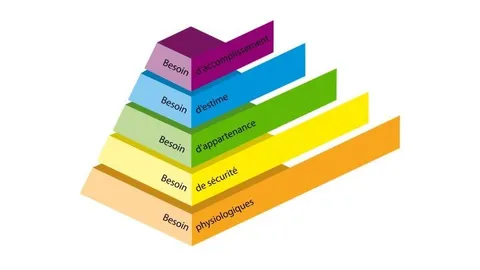
Maslow's Hierarchy of Needs
What if your own development was not only dependent on you but on the fundamental needs present for every human being? What if understanding your needs made it easier to get closer to a feeling of well-being? Learn about Maslow’s hierarchy of needs.

Improve your concentration
Knowing how to concentrate is not something innate, you have to learn to develop it. And yet, it is the key to our development in our personal and professional life, and will help you achieve your goals. Therefore, it will bring you personal satisfaction and pride of accomplishment. However, it is not easy to cut ourselves off from all surrounding or internal distractors and pay particular attention only to our objective. Here are some tips on how to improve your concentration.

Therapy ACT
In mental health and in the context of psychotherapy, one element often comes up as a source of suffering: the need for control, and the distress it brings when, inevitably, certain elements escape this control, which can lead to a feeling of helplessness. The ACT is one of the tools to overcome this difficulty.

Work on your self-confidence
We have all, at one time or another, doubted ourselves or our abilities to complete a task or overcome an obstacle. When this lack of self-confidence begins to become too difficult to overcome and when it handicaps us, limits us, when it builds barriers to our projects or our desires, it is fundamental to take charge of ourselves to improve it. Having confidence in yourself will allow you to achieve great things, and your personal pride will only grow.

Positive psychology
Even today, many therapies focus mainly on what is wrong. Thus a lot of knowledge has been accumulated concerning the negative which surrounds humans. But little attention has been paid to the strengths of people that enable them to be in a state of well-being. To get better, it is also necessary to understand what makes you feel good.