
Therapy ACT
In mental health and in the context of psychotherapy, one element often comes up as a source of suffering: the need for control, and the distress it brings when, inevitably, certain elements escape this control, which can lead to a feeling of helplessness. The ACT is one of the tools to overcome this difficulty.

Key takeaways
- The ACT is based on two pillars: acceptance of what cannot be controlled and commitment to actions aligned with its values.
- The Hexaflex model identifies six areas of psychological flexibility: present moment, acceptance, defusion, Self as context, values and committed action.
- Defusion helps us perceive thoughts as simple mental events rather than truths.
- ACT has shown its usefulness against anxiety, depression, stress, chronic illnesses and smoking cessation.
1. WHAT IS ACT THERAPY?
ACT therapy takes its name from the English for Acceptance and Commitment Therapy.
This name comes from the two pillars of therapy: accepting what we cannot control and engaging in actions that bring us closer to what is best for us. This aims to promote and develop cognitive flexibility, that is to say the ability to adapt to situations in an appropriate and healthy way.
Through the patient's functional analysis, the therapist will identify the sources of suffering linked to cognitive rigidity, maladaptive schemas and dysfunctional beliefs, and bring, through cognitive and emotional exercises, new nuances and strengths on which to base themselves to move forward.
2. WHAT IS ACT THERAPY BASED ON?
The researchers who participated in the development ofACT illustrate its basics using the model Hexaflex, which represents the six areas that influence the spectrum between flexibility and psychological rigidity. Our mind tends more easily to move towards a rigid operation, what may have worked in the past becomes the single solution in the future, which reduces the resilience and crystallizes a inefficient operation over the long term.
Each domain represents a skill or set of skills that can be developed independently and in combination with others and which helps develop flexibility.
The relationship with time, returning to the present moment
We often tend to project ourselves into our thoughts, to ruminate the past or anticipate the future. These thoughts give disproportionate importance to matters beyond our control or that we cannot change. They also prevent us from focusing on the present moment and act according to the current situation. Through exercises based on mindfulness (mindfulness), we learn to re-anchor ourselves in the present and no longer dwell on thoughts as much.
The relationship with experience, being in acceptance
A recurring element in the testimonies of people suffering from mental suffering is the feeling of exhaustion, to fight without ever getting out and to not to move forward. This need for control results either in maladaptive behaviors or inavoidance, both of which risk making the situation worse in the long term.
TheACT proposes to change this mode of operation through a experiential approach : agree to live the situations, also unpleasant whatever they may be, and not to seek to control what can't be. Trying a Mindset “to be” rather than “to do” when “doing” is not effective. This state allows you to focus on what is truly important about yourself and your actions. It is not about no resignation, but of benevolence towards oneself and the reality of human experience.
The relationship with thoughts, beginning defusion
The fusion of thoughts is to believe the thoughts as a reflection of reality. They are interpreted in a way literal, even, or especially, when these are uncontrollable intrusive thoughts. If the thought “I suck” crosses my mind, it must be true.
The defusion will then be the mental process which puts thoughts back in their place, that is to say simple mental events. I'm not rubbish, I've had the thought that I was rubbish, but by seeing it for what it is, I can challenge that thought. It is just a series of words or mental images, and I can make the effort to verify this thought, its veracity, its relevance and to detach myself from the effect it could have.
The relationship with Self, as context rather than content
Our mind tends to perceive the Self, the individual, as content, that is to say the accumulation of its traits and experiences, a fixed mass defined by simple and immutable labels: "I am someone trustworthy", "I am a bad person", "I am unfaithful", etc... These labels facilitate the work of our brain, but their rigidity blocks our evolution because it does not take into account the context. This can lead to self-fulfilling prophecies and a poor self-image that is difficult to change.
The Self as context leads the individual not to perceive himself as a state, but as a set of processes which vary over time and situations. Our actions and decisions are influenced by many external and internal factors, and these change over time.
If I have been unfaithful in a past relationship, it could be due to a dysfunctional relationship, a lack of communication or self-confidence, a night out that was a little too drunk. Understanding context helps us understand actions in order to reproduce or modify them to get closer to what is important to us.
Personal values, clarifying the path
Values are the moral compass that is supposed to guide our actions. Each individual has their own values. Acting in accordance with your values allows you to feel good in your life and to build a solid self-image. Conversely, when our actions are contrary to our values, they bring regrets, bitterness and a poor self-image.
The ACT makes it possible to identify and consolidate the most important values for each individual in order to inform decision-making. Values will serve as a guide in the face of changing emotions and thoughts that can be intrusive. When in doubt, referring to the values will help inform decision-making and action.
Decision-making through committed Action
Once the values have been defined, it is time for behavioral activation, the move to action. The individual defines life objectives or values (achieving a goal or getting closer to one's values) and implements actions to get closer to these objectives. This process allows you to escape from the depressive spiral.
It is during this stage that many obstacles can be encountered. The internal obstacles will be overcome by acceptance and defusion. Actions may bring unpleasant thoughts or emotions, but by stepping back and keeping the goal in mind, the long-term benefits come to the fore. External obstacles are overcome by problem solving, a skill that develops by practicing finding solutions in accordance with values.
Committed action helps develop a sense of accomplishment and creates a momentum of commitment.
The final objective of developing these skills is to be able to adapt to life events, and to no longer be a prisoner of one's thoughts. Return to the present moment to act in accordance with your values rather than avoiding the experience. We thus find control over the areas that can be influenced, and an acceptance of what cannot be so as not to let these elements stop us.
3. HOW USEFUL IS ACT THERAPY?
ACT therapy allows you to escape situations where you feel stuck, helpless and locked in your thoughts.
It helps you regain a sense of advancement and progress in your life by promoting adaptability and resilience.
This therapy has proven its effectiveness in combating anxiety and depression, helping to reduce stress, manage chronic illnesses as well as quitting smoking.
numerous studies are underway to establish more precisely the effectiveness of this therapy across the entire spectrum of mental health, but the skills that it helps to develop, and which are found in other already validated therapies, suggest that ACT has a very broad field of action and from which many people, even without mental pathology, could benefit.


C2Care, a leader in immersive technologies for mental health
Create your free account to explore over 250 virtual reality exposure situations and subscribe directly online.
FAQ about Act Therapy and Virtual Reality
Why use virtual reality in the field of mental health?
Virtual reality allows graduated exposure to anxiety-provoking stimuli in a secure setting, with realistic and reproducible environments. It promotes patient engagement and personalized care, adapted to anxiety disorders, phobias, post-traumatic stress, obsessive-compulsive disorders and addictions.
What pathologies can be treated in virtual reality?
Virtual reality treats anxiety disorders (phobias, post-traumatic stress, obsessive-compulsive disorders), addictions, mood disorders, and is also used in cognitive remediation. Each exercise is adapted to the specific needs of the patient by the practitioner.
Can I feel nauseous while using the headset?
A feeling of cybersickness, close to nausea, can occur in around 10% of virtual reality headset users. This phenomenon remains in the minority and varies according to each person's sensitivity to immersive environments.
Do I have access to all environments?
Yes, all C2Care environments are grouped into a single application. You do not need separate software to access the different therapeutic scenes offered.
Who should I contact if I have software problems?
The C2Care technical service can be reached via live chat from your control platform. If there is a problem with the headset, a diagnosis is made with you, and the defective equipment is replaced within 48 hours if necessary.
How long has this existed?
C2Care has been testing its virtual reality exposure therapy software in hospitals since 2016. This field experience has made it possible to refine the environments offered to practitioners and their patients.
Who can use virtual reality for treatment?
Practitioners such as psychologists, psychiatrists and occupational therapists use virtual reality in therapy. It is integrated into health establishments such as CHU, hospitals, clinics, EHPADs and follow-up care and rehabilitation structures.
Author
C2Care
Related articles

Toltec agreements
The Toltec agreements aim to rediscover freedom and personal well-being, present in ancestral Mexican culture. It was Don Miguel, in 1997, who shared this precious information with us in order to help us feel more in harmony with ourselves.

Behavioral activation
Faced with depression and its negative symptoms, behavioral activation is today a first-line treatment whose effects continue to be highlighted in the scientific literature. Theorized in the 1950s, developed in the 1970s and popularized in the 1990s, behavioral activation shows effects equivalent to anti-depressants and cognitive therapy, while simplifying the patient's therapeutic path. Spotlight on this still little-known technique.
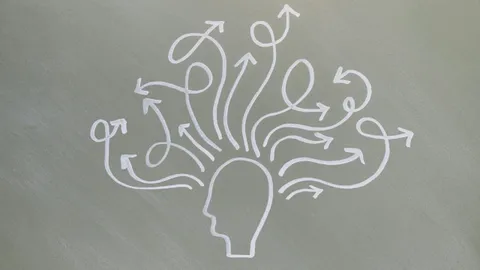
Understanding CBT: an effective and concrete approach to get better
Cognitive-behavioral therapies, or CBT, are today among the most used psychotherapeutic approaches and the best validated by scientific research. Recommended by many health authorities, they are aimed at people who wish to better understand their psychological difficulties and learn how to overcome them in a concrete way.

Self-determination
What if completing a task didn't depend solely on you? What if your personality was governed by fundamental psychological needs and responding to them leads you to personal fulfillment? Being self-determined means being able to respond to a feeling of freedom, interest, valuation and acceptance at the same time. Self-determination is then fundamental to our well-being.

Mindfulness meditation
When we are overwhelmed by our thoughts, mindfulness meditation is a breath of fresh air to find our bearings.
Positive psychology
Even today, many therapies focus mainly on what is wrong. Thus a lot of knowledge has been accumulated concerning the negative which surrounds humans. But little attention has been paid to the strengths of people that enable them to be in a state of well-being. To get better, it is also necessary to understand what makes you feel good.