
The savior syndrome
Among us there are saviors. These people who are very, even too, empathetic, who want to help everyone in every situation. These are people who will give everything for others, even if it means forgetting themselves. We call it savior syndrome.

Key takeaways
- Savior syndrome is a psychological disorder not listed in the DSM, marked by a need for recognition and codependency.
- Saviors lack self-confidence and help others to strengthen their ego.
- The causes often go back to childhood: trauma, abandonment or parentification.
- It is distinguished from the nurse syndrome, which helps without expecting anything in return.
- Treatment involves awareness of the disorder and work on self-esteem.
1. What is savior syndrome?
Savior syndrome is a psychological disorder that is not listed in the DSM. People have a constant need to receive gratitude and recognition from others. Thus, he presents an empathy and a need for sacrifice for others, which is constant. This syndrome is also referred to as “codependency”.
These are people who greatly lack confidence in themselves. What they seek above all is not necessarily to help others, but unconsciously, they seek to help themselves. Helping others will also satisfy your ego, whether in your own eyes or in the eyes of others.
Empathy is therefore a character trait particularly developed in these people. They are often found in professions related to helping others. Jobs where people must use a lot of kindness, particularly in the context of health. Saviors can also more easily surround themselves with people who need help, such as people with addictions.
It is necessary to clearly distinguish between a person suffering from savior syndrome and an altruistic person. The big difference between the two is that the savior will have no limit in the help he will provide, going so far as to sacrifice himself or his needs.
There are different categories of saviors:
- The damaged savior: represented by people who need to be loved and admired in order to compensate for his injuries and his self-image. They therefore have a constant need to be admired.
- The empathic savior: this type of savior is a person who will not tolerate the fact that their partner moves away, they will experience this emotional distance as a threat. So this type of savior will be extremely afraid of being abandoned.
- The terrorizing savior: this is a person who will want to do everything to especially not be abandoned. He is therefore a manipulator, who will exercise physical and emotional control over his victim.
In the most extreme cases, the savior can go so far as to cause unhappiness in others by belittling them, manipulating them... to more easily be able to save them afterwards.
2. Causes of savior syndrome
Several explanations lead to this syndrome. Often, the causes of savior syndrome are found in childhood.
These may be children who have experienced different traumas, abandonments.
They can also be children who have been “parentified”. That is to say that very early on they had to take on the role of parents to their brothers and sisters, for example.
These are people who need to feel valued and to exist for others. With self-esteem often very low, helping others allows them to improve their ego.
3. The link with nurse syndrome
With the multitude of syndromes that exist, it is easy to get lost. However, we must be careful not to confuse savior syndrome and nurse syndrome.
The first distinction is made by the prevalence of people affected by nurse syndrome. As its name seems to indicate, it is often women who suffer from nurse syndrome, while for savior syndrome it is men and women in an undifferentiated manner.
The second major distinction between the two comes from the provision of aid. Indeed, as part of savior syndrome, the person expects a certain recognition behind their help. Helping others allows them to inflate their ego. Some will even call savior syndrome “narcissistic altruist”.
In the context of nurse syndrome, people do not seek any interest behind their help, they are empathy, generosity and a need to help others, without expecting anything in return. The relationship of a person with Nurse Syndrome can be extremely toxic for both partners. “The nurse” will give everything for her/his partner while the second person in the couple may feel infantilized.
4. Management of savior syndrome
To be able to deal with savior syndrome, a first step is essential: awareness of the disorder.
The goal of therapy is not to fall into the other extreme, that is, to no longer help others. But it will be in the fact of being able to accompany, help without falling into an unhealthy relationship which can harm the person.
The needs of saviors are often pushed aside in favor of the needs of others. The goal will be to get the person to refocus on their own needs: identify them and concentrate on them.
It is necessary to work on the self-esteem of savior people, as well as on their negative beliefs.

C2Care, a leader in immersive technologies for mental health
Create your free account to explore over 250 virtual reality exposure situations and subscribe directly online.
Savior Syndrome and Virtual Reality FAQs
Why use virtual reality in the field of mental health?
Virtual reality allows graduated exposure to anxiety-provoking stimuli in a secure setting, with reproducible environments. The patient remains engaged thanks to the immersive aspect, and the practitioner adjusts the treatment to their specific needs.
How long has this existed?
C2Care has been testing its virtual reality software in hospitals since 2016. This collaboration with health establishments has made it possible to refine the therapeutic environments offered to practitioners.
What pathologies can be treated in virtual reality?
Virtual reality treats anxiety disorders such as phobias, post-traumatic stress and obsessive-compulsive disorder. It also applies to addictions, mood disorders and cognitive remediation.
Can I feel nauseous while using the headset?
Some people may experience cybersickness, a sensation similar to motion sickness, when using a virtual reality headset. This phenomenon affects around 10% of users and generally remains temporary.
Do I have access to all environments?
Yes, all C2Care environments are grouped into a single application. You therefore do not need multiple software programs to access the entire catalog offered.
Who should I contact if I have software problems?
Our technical service can be reached via live chat from your control platform. In the event of a headset failure, a diagnosis is made and the defective equipment is replaced within 48 hours.
Who can use virtual reality for treatment?
Practitioners such as psychologists, psychiatrists and occupational therapists use virtual reality in therapy. It is deployed in establishments such as CHU, clinics, EHPADs and follow-up care and rehabilitation centers.
Author
C2Care
Related articles
Cognitive distortions
Every day we must understand the reality around us. All our psychological processes will be activated in the context of different situations: whether decision-making processes, emotions, understanding, evaluation... But these processes can be erroneous and limited by cognitive distortions.
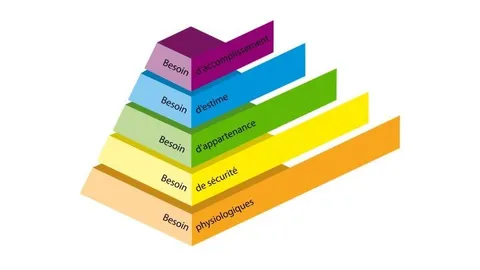
Maslow's Hierarchy of Needs
What if your own development was not only dependent on you but on the fundamental needs present for every human being? What if understanding your needs made it easier to get closer to a feeling of well-being? Learn about Maslow’s hierarchy of needs.
High Intellectual Potential
HPI, Surdoué or even Zebra. All these terms overlap under the same principle. HPI is a term that we hear a lot about lately, whether on television through the news or series (eg: HPI with Audrey Fleurot), or even on social networks. Let's take stock of High Potentials together. HPI stands for **“High Intellectual Potential”**. This indicates that people have higher **cognitive intelligence** than people in the same age group. For a person to be considered HPI, they must have an IQ (Intelligence Quotient) **higher than 130**, which corresponds to **2.3%** of the population with the highest IQ.

Better understand Attention Deficit Disorder (ADHD)
It is a disorder that we hear more and more about, with the impression, sometimes, that it is thrown around indiscriminately. It remains one of the most common neurodevelopmental disorders, which the constant improvement of diagnostics is bringing to light. However, it remains too little known in its operation and presentation. Shedding light on ADHD and what this acronym means.

Imposter syndrome
Do you have a feeling of fooling the world around you, whether from a personal or professional point of view? Do you have trouble accepting compliments? Maybe you are prone to imposter syndrome! Although not considered pathological, imposter syndrome arouses a lot of curiosity in psychology. Indeed, it affects a large majority of people who may have this experience at least once during their life.

Parental burnout
We have all heard of Burn Out Professional. But have you ever heard of parental/family burnout? Perhaps this is still taboo, but yes, despite all the love that parents can have for their child, a parent can fall into exhaustion from their parental role. Let’s take a closer look at this subject and without taboo this time!