
High Intellectual Potential
HPI, Surdoué or even Zebra. All these terms overlap under the same principle. HPI is a term that we hear a lot about lately, whether on television through the news or series (eg: HPI with Audrey Fleurot), or even on social networks. Let's take stock of High Potentials together.
HPI stands for “High Intellectual Potential”. This indicates that people have higher cognitive intelligence than people in the same age group. For a person to be considered HPI, they must have an IQ (Intelligence Quotient) higher than 130, which corresponds to 2.3% of the population with the highest IQ.
Key takeaways
- HPI (High Intellectual Potential) corresponds to superior cognitive intelligence, with an IQ above 130.
- HPE (High Emotional Potential) refers to increased emotional intelligence and sensitivity, distinct from hypersensitivity.
- HPI, gifted, zebra or giftedness cover the same characteristics.
- Boredom at school, hypersensitivity, perfectionism and feeling out of step are common signs among people with HP.
- No typical job exists for HPs, but repetitive positions encourage bore-out and burn-out.
1. What is an HP person?
As said previously, this high potential mainly concerns cognitive skills. In cognitive skills we find: different memories, knowledge, logical skills, visuo-spatial skills, etc.
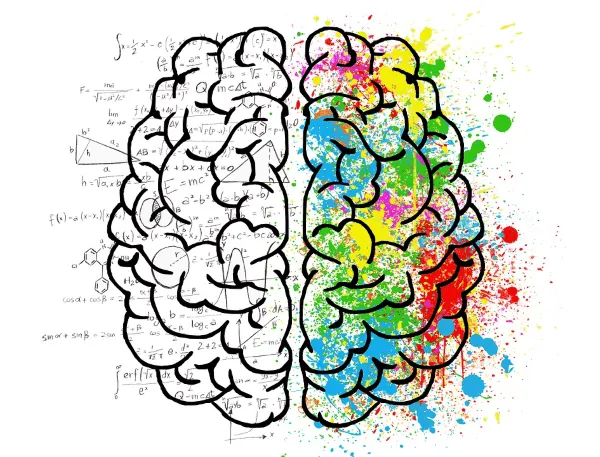
Often HPI people will have the characteristic of thinking in a less linear way than the rest of the population, this is what we call tree thinking. One thought will give rise to a multitude of others, which can also lead to difficulty concentrating on one thing at a time. This difficulty in focusing attention on an idea can lead to ADHD. However, be careful, it is not because you are High Potential that you necessarily have ADHD and vice versa.
Another diagnosis that can often be linked to PIH is the diagnosis of ASD and particularly Asperger's Syndrome. Just like ADHD, this does not mean that all HPIs have Asperger's and vice versa.
A High Potential person is considered to have neuro-atypical functioning. This functioning is characterized by a neurological development different from the rest of the population. Thus people with High Potential will not be superior to the rest of the population but will make the connections rapidly between the different elements around them and memorize them more easily.
First of all, we generally distinguish two types of High Potential:
The HPI: High Intellectual Potential
The HPE: High emotional potential
Be HPI
Being HPE
The HPE which is the High Emotional Potential: This characteristic corresponds to superior emotional intelligence. HPE people do not necessarily have the same cognitive skills as HPI, however they have significant emotional skills. They will present a strong sensitivity, empathy, understanding of the emotions of others and their own. Often HPE people will also have good interpersonal skills by listening to others. So one of the main characteristics of HPE people is the fact that they are aware of their emotions and the management of them.
It is essential not to confuse HPE and hypersensitivity. Indeed, a hypersensitive person will also be very sensitive to what surrounds them in their environment, whether it be noises, light, sensations, etc. Whereas a person with HPE will only concern emotions and the entire sphere that surrounds them. Like ADHD in HPI, HPE people can be hypersensitive and hypersensitive people can be HPE, but this is not always the case!
2. What are the differences between HPI – HPE – Gifted – Zebra?
With all these terms it is easy to get lost and no longer understand anything. So we're going to take stock of all that again. Moreover, depending on the sites, the limits between them are quite vague.
In the scientific community the term used is "High Potential", in common language some use the terms "giftedness" or "zebra" for example. But all these terms refer to the same characteristics.
3. What are the symptoms of PIH? How do I know if I'm HP myself?
In HP we are not going to talk about "symptoms". Indeed, the term “symptom” refers to a pathology, an illness. Apart from being HP is not a disease but a characteristic of the person. So we will instead use the term "specifics" which seems more suitable to us.
To find out if you are HP there are different tests that can be carried out with the help of professionals (psychologists, psychiatrists)
Several signs may suggest that you are gifted:
- HP people are bored at school or even drop out and find themselves in academic failure. Maybe you yourself had the impression at school that the teacher was always repeating the same thing, that the lessons were too slow...
- For HPIs, the IQ is higher than the average: around 130. Different professionals can assess IQ via different scales such as WISC (for children) or the WAIS (for adults)
- Good memorization courses: Indeed, people with high potential are able to very easily memorize information on subjects that interest them.
- A Emotional hypersensitivity
- Very curious, there is the need to know the “why” things, to drink in knowledge regularly.
- It can be difficult to make a connection with others: these are people who can find themselves in a certain social isolation. On the contrary, HPE people have great ease in developing social relationships but have great difficulty maintaining them over the long term.
- A person with high potential is often a perfectionist person who can consequently be led to regularly think of himself that he is "zero", because what he does is never good enough!
- HPI and HPE people feel often out of sync compared to others, which can create great suffering.
Of course, as explained above, there are tests which make it possible to detect a High Potential. If you think you yourself are part of this population, do not hesitate to see a trained professional!
4. What studies and careers for HPIs?
If you are HP yourself, you may feel that you have great difficulty entering the professional world and you are therefore wondering about the professions that could suit you.
I have bad news... There is no typical job for HP people. You mainly need to find a professional path which corresponds to your expectations, your desires, your interests and your needs. Very often, you will not find the professional path that suits you from the start. You may need to experiment first before finding what works best for you.
Often the professions which correspond to HP people are those which bring important thoughts throughout the day. To maintain a job in the long term, it must be able to respond to the intellectual/emotional curiosity of HP people, requires an analysis…
Even if there is no typical job, it is important to not be in a repetitive job where there is nothing to learn. Finding yourself in this type of profession can bring boredom and lead to bore out (mental and physical exhaustion due to boredom and non-satisfaction with work).
Within the framework of HP, people are also sensitive to burnout (emotional and mental exhaustion, due to prolonged and significant investment). Indeed, in constant need to learn and realize multiple tasks at once, they can also quickly find themselves overwhelmed by the many tasks required. In addition, the supervisor can also benefit, by giving even more tasks to the employee.
Despite the gap that HP people may feel, they have many strengths that they can put into practice in the professional world:
- IT professions
- human contact professions
- The salespeople
- art and creation
- ..
As previously said, being High Potential is not an illness or pathology! You think, understand and see things differently. However, if this is a great pain for you, do not hesitate to go see a professional which will help you understand.

C2Care, a leader in immersive technologies for mental health
Create your free account to explore over 250 virtual reality exposure situations and subscribe directly online.
HPI and Virtual Reality FAQ
What is the difference between HPI and HPE?
The HPI concerns cognitive skills: memory, logic, visuospatial skills. HPE refers to superior emotional intelligence, marked by strong sensitivity and empathy. HPE people do not necessarily have the same cognitive skills as HPI people.
HPI, gifted, zebra: are they the same thing?
Yes. In the scientific community, the term used is “High Potential”. In common parlance, “giftedness” or “zebra” designate the same characteristics. The boundaries between these names remain vague depending on the sources, but they refer to the same neuro-atypical functioning.
Is high potential a disease?
No. Being HP is a characteristic of the person, not a pathology. C2Care prefers the term “specificities” to “symptoms”, the latter referring to an illness. If this difference becomes a source of suffering, consulting a professional trained in HPI can help to better understand it.
What IQ corresponds to high intellectual potential?
An HPI is characterized by an IQ above 130, which corresponds to 2.3% of the population. This quotient is assessed by a psychologist or psychiatrist, using scales such as the WISC for children or the WAIS for adults.
Is PIH related to ADHD or Asperger's syndrome?
A link exists but is not systematic. The tree-like thinking specific to HPI can lead to difficulty concentrating similar to ADHD. PIH is also sometimes associated with Asperger's syndrome, without one implying the other: each diagnosis remains independent.
What is Camille, the AI assistant of C2Care?
Camille is an AI assistant that accompanies the patient within virtual reality scenes. He plays the role of a trusted person in whom the patient can confide without judgment, in addition to the virtual characters present in the environments.
Is being HPI an illness?
No. Being High Potential is not an illness or pathology, but a characteristic of the person. In the event of suffering related to this operation, consulting a trained professional is recommended.
References
- item
Difference between psychologist and psychiatrist
View - item
Test your risk of burnout
View
Author
C2Care
Related articles
Pessimism
“Stop always being pessimistic!” Have we often repeated this type of sentence to you? Pessimism is something we can all experience at certain times in our lives. However, some of us will be too pessimistic or even maladaptive, which will have an impact on our personal and professional lives.

National Hypersensitivity Day
This day is an opportunity to revalue hypersensitivity. Launched by Saverio Tomasella, it helps to better inform managers on the characteristics and modalities of hypersensitivity. They represent a quarter of the population, there are almost 10 million in France. We must therefore now take into account the specific problems of hypersensitive people and their place in society.

The mental load
You've probably already heard about mental load. But do you really know what that represents?

Emotional intelligence
Have you ever taken your stress or anger out on someone when it didn't come from them? Knowing how to accept and correctly manage your emotions is proof of emotional intelligence that is fundamental to success.

Autism Spectrum Disorder
Autistic disorder, Asperger syndrome, Heller syndrome, Pervasive developmental disorder not otherwise specified: since the DSM-V all these qualifications have been grouped under the name ASD – Autism Spectrum Disorder. Is it a disease? What are the different shapes? How to detect it? Let's take stock of this disorder, which is still poorly understood today and which gives rise to a large number of questions and false beliefs.

Post-traumatic stress
We hear a lot about post-traumatic stress (PTSD), but what is it really? Can you suffer from post-traumatic stress even if you haven't actually experienced a traumatic event? We will try to answer all these questions together.