
Self-stigma
Belonging to a minority group can be a source of great suffering. Most often, this suffering comes from outside, from majority groups or other minority groups. But the stress and suffering felt in relation to this status can also come from within. Low self-esteem, dysfunctional beliefs, repetition of toxic patterns, self-stigma adds additional suffering to the minority experience. It is interesting to understand how this mechanism works to better support people who suffer from it.

Key takeaways
- Definition: self-stigma is the set of processes by which the stigma experienced impacts one's self-image.
- Components: perceived stigma, adherence to stereotypes, internalization or distance from the group, anticipation of stigma.
- Consequences: stress, increased risk of anxiety and mood disorders, social isolation, reduced self-esteem.
- Populations concerned: racialized people, LGBTQ+ community, people suffering from psychological disorders, formerly incarcerated people.
- Support: cognitive and behavioral therapy, work on perceptual biases, support group, kindness from those around you.
1. WHAT IS SELF-STIGMA?
According to Kelly Moore and her colleagues, self-stigma is the set of processes through which the stigma experienced impacts one's self-image.
It is a complex process made up of several components that feed off each other.
The first component is perceived stigma. It is one of the most important components, because it determines the degree of internalization and anticipation of stigma.
Perceived stigma will then lead to adherence to stereotypes. The more membership in a stigmatized group is linked to factors considered controllable (substance consumption, incarceration, etc.), the stronger the adherence to the negative values and beliefs of its stigmatization will be. They will be perceived as true, thus endangering one's self-image.
If adherence to the stereotype has taken place, the stigmatized person will then have two choices: distance their identity from that of their minority group, even if it means leaving part of their identity there, in order to preserve their self-image, or internalize the stigma and apply it to themselves, more easily implementing behaviors in accordance with the stereotypes.
By doing this, they will gradually undermine their image and self-esteem, but also expect more stigmatization. This is the fourth component of self-stigma: anticipation of stigma. People who are victims of stigma will be constantly waiting and anticipating more stigmatization. This form of anxiety is a source of a lot of stress and confirmation bias. Anticipation of stigma only needs the stigma to be perceived to appear, but it is also reinforced by internalized stigma.
2. WHAT IS THE IMPACT OF SELF-STIGMA?
Self-stigma is a particularly vicious process that has many negative consequences in the lives of people who suffer from it.
The first and most important of these is the stress that she brings. People with high levels of self-stigma live in the constant anticipation of negative experiences. This type of stress has been correlated with greater chance of developing an anxiety disorder, in particular social anxiety or generalized anxiety in this case, as well as greater chances of developing a mood disorder.
Then come the consequences of internalized stigma. By applying the negative beliefs and stereotypes to one's person, we observe greater chances of implementing behaviors that will validate these stereotypes and undermine self-esteem. In addition, strong internalized stigma will create cognitive validation biases which will reinforce stereotypes and make it more difficult to escape from them.
This is particularly serious in the context of internalized stigma around a psychological pathology. We then run the risk of refusing to engage in therapy or treatment thinking that it will be of no use, that the mental state will worsen and therefore lead to even more severe problems.
Additionally, as mentioned previously, the Internalized stigma continually degrades self-esteem and sense of self-efficacy, leading to a feeling of helplessness and of uselessness increasingly high, another factor contributing to the appearance of anxiety-depressive disorders and withdrawal from the therapeutic process.
Another risk is present if the stigma is not internalized. As mentioned above, if the stigma is not internalized, the stigmatized person will distance yourself as much as possible from the rest of the stigmatized group to which she belongs, so as not to associate her personal image with the negatively stereotyped image of this group.
This has two consequences: the first is to cut yourself off from part of your identity and therefore never being able to fully express oneself, which can lead to strong frustration and a deterioration of one's self-image.
The second consequence is social isolation. Where it is common to find a lot of mutual aid and support between members of a stigmatized group, by moving away from this group, people who refuse to internalize the stigma often find themselves without support group, and also distant from the majority group which can exclude them because of their status. These people then find themselves between two waters, “not enough” of a minority to benefit from the protection of their group but “too” of a minority to integrate into the rest of society. This isolation obviously has deleterious consequences on mental health.
3. WHO IS CONCERNED BY SELF-STIGMA?
Anyone who experiences some form of stigma because of an internal or external characteristic can suffer from self-stigma. However, certain minority groups are particularly victims, with consequences regularly documented in the literature. Here is a non-exhaustive list.
Racialized people: People who are not perceived as white or Caucasian often suffer from a lot of social and institutional discrimination. Many racist and xenophobic stereotypes around criminality in particular contribute to the self-stigma of this group. It is important to note that although it is not the only factor, these kinds of stereotypes can fuel self-fulfilling prophecies.
The LGBTQ+ community: People who are not heterosexual and cisgender (i.e. transgender people, whose gender does not correspond to the one assigned at birth) are subject to extremely violent discrimination and stigma (and on the increase in France since 2013). Many stereotypes and preconceived ideas based on misogynistic beliefs build the stigmatized image of this community. Social isolation that self-stigma can lead to is particularly dangerous when we know that between 17 and 41% of young people in this community will be homeless during their lifetime.
People suffering from psychological disorders: Psychiatric disorders largely bring their share of suffering and difficulties intrinsic to the impact they have on the overall functioning of the individual. However, the view of others and the stigmatization of mental disorders contribute to reinforcing this suffering. Self-stigma linked to psychological disorders is linked to lower levels of perceived self-efficacy, self-esteem and poorer adherence to treatment and therapy, with the risk that the pathology worsens or that comorbidities develop.
formerly incarcerated people: A person sentenced to a prison sentence has approximately a 60% risk of reoffending upon release, more than one chance in two. Many factors explain this score and self-stigma is one of them. This can lead to beliefs such as “Once a delinquent, always an offender”, and, through the internalization of stigma, reinforce the identity of delinquent or criminal in order to get closer to the group sharing their experience. By reducing the feeling of personal efficacy, we also run the risk of reducing the efforts linked to reintegration because no positive change is perceived as possible and perception biases reinforce these beliefs with each interaction perceived as negative and linked to the experience of incarceration.
4. WHAT TO DO AGAINST SELF-STIGMA?
It is important to clearly identify populations likely to suffer from self-stigma in order to be able to assess it and offer appropriate treatment.
A cognitive and behavioral therapy will be a first line of treatment adapted to modify the schemas and beliefs associated with stigma and prevent future internalization of the stigma and future adherence to stereotypes. People belonging to a minority group who do not adhere to discriminatory stereotypes have fewer risks associated with stigmatization. It will also be important to work on the anticipation of stigma because this can only be based on perceived stigma. Work on perception bias will be important.
Beyond cognitive work, behavioral work to emerge from self-fulfilling prophecies and maintain healthy behaviors that reinforce a good self-image and a feeling of personal effectiveness.
It is also important to encourage a person suffering from some form of stigma to find asupport group that shares their experience, in order to form protection and social support.
Finally, when someone reports an experience of stigma to you, or you know that they are part of a minority group, it is important to demonstrate high levels of kindness and ensure you not make judgments that could reinforce self-stigma.

C2Care, a leader in immersive technologies for mental health
Create your free account to explore over 250 virtual reality exposure situations and subscribe directly online.
Self-Stigma and Virtual Reality FAQs
Why use virtual reality in the field of mental health?
It allows graduated and controlled exposure to anxiety-provoking situations, in a reproducible framework. The immersive aspect promotes patient engagement and adherence to treatment. The environments are adjustable by the practitioner according to the needs of each patient.
Since when has therapeutic virtual reality existed at C2Care?
C2Care has been testing its software in hospitals since 2016. This experience is now based on an extensive catalog of environments used by practitioners in many countries.
Do I have access to all environments?
Yes, all C2Care environments are grouped into a single application. The practitioner can thus move from one scene to another according to the patient's needs, without changing software.
Who should I contact if I have software problems?
The technical service can be reached via live chat from your control platform. In the event of a hardware problem, a diagnosis is made and the defective hardware is replaced within 48 hours if necessary.
Can I feel nauseous while using the headset?
Cybersickness may occur in some people in virtual reality. It affects around 10% of users and manifests itself as sensations similar to motion sickness, which are generally temporary.
What pathologies can be treated in virtual reality?
Virtual reality is used in anxiety disorders (phobias, post-traumatic stress, obsessive-compulsive disorders), addictions, mood disorders and in cognitive remediation. Self-stigma, often associated with these disorders, can be worked on in addition to cognitive and behavioral therapy.
Author
C2Care
Related articles

Dissociative identity disorder
Dissociative identity disorder or DID is a mental disorder that was previously called multiple personality disorder. This disorder is characterized by the presence of one or more alters (identities) who will take turns taking control of the person.
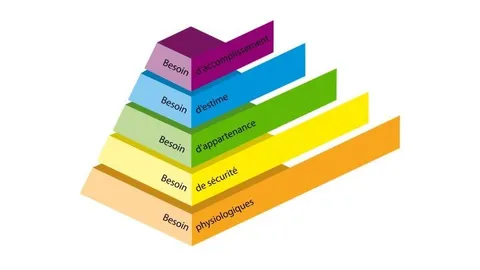
Maslow's Hierarchy of Needs
What if your own development was not only dependent on you but on the fundamental needs present for every human being? What if understanding your needs made it easier to get closer to a feeling of well-being? Learn about Maslow’s hierarchy of needs.

Assertive communication
These days, communicating well is an essential skill. First of all, it is transversal and affects absolutely all areas of our lives. But above all, contemporary means of communication mean that we tend to be in continuous contact with others (via social networks in particular). Consequently, our ability to exchange and express our emotions as well as our ideas in a way that is healthy for ourselves and for others becomes essential for our well-being. This is precisely the purpose of assertive communication.

Therapy ACT
In mental health and in the context of psychotherapy, one element often comes up as a source of suffering: the need for control, and the distress it brings when, inevitably, certain elements escape this control, which can lead to a feeling of helplessness. The ACT is one of the tools to overcome this difficulty.
Gender identity: better understanding to better support
Questions of gender identity and inclusiveness have been at the heart of the media landscape for several years. From a health point of view, transgender people often suffer from significant therapeutic wandering due to poor education on transidentity and lack of information from professionals. A short introduction to better understand gender identity and how to better care for trans people.

C2Care supports Mental Health Information Week
From March 16 to 29, 2020, the 31st Mental Health Information Weeks (SISM) will take place, with around a hundred events organized throughout France.