
A world first: virtual reality for lung transplantation
For the first time in the world, a patient on the lung transplant list will be able to benefit from therapeutic virtual reality sessions to prevent post-operative psychological trauma, thanks to the unprecedented partnership between C2Care and AP-HM (Public Assistance – Marseille Hospitals).
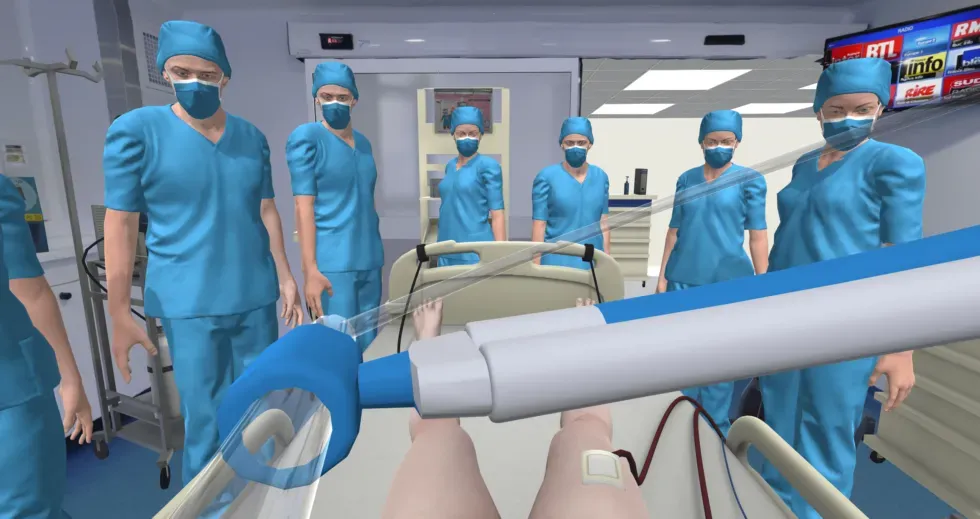
Key takeaways
- C2Care and AP-HM are launching, for the first time in the world, a virtual reality program for patients awaiting lung transplants.
- Objective: prevent anxiety and depressive disorders linked to waking up in intensive care using “habituation therapy”.
- A 3D scanner C2Care recreates the resuscitation box in 360° for progressive exposure using a virtual reality headset.
- 3 sessions of 45 minutes are offered to 25 patients drawn at random, out of the 50 lung transplants carried out each year by AP-HM.
- Dr Coiffard hopes for a 30% reduction in patients' post-operative anxiety.
1st in France: virtual reality serving patient health
C2Care, a Toulouse start-up created in 2015, is positioned in the virtual reality therapy segment. The software offered by the startup is now used by 600 healthcare professionals.
Doctor Benjamin COIFFARD, pulmonologist at AP-HM and Doctor François MALTESE, psychologist at AP-HM, are joining forces with C2Care for a new preventive technique whose objective is to prevent the occurrence of frequently encountered psychological disorders, in the short and medium term, post-transplant.
“Hyper-immersion” to avoid psychological trauma
This preventive method is aimed at patients who receive a lung transplant. Following the surgical procedure, the awakening is excessively violent in the aggressive environment of the intensive care unit. These consequences can lead to post-operative complications and cause psychological trauma: in particular anxiety and depressive disorders. C2Care, in collaboration with AP-HM, therefore proposes to compensate for these medico-psychological risks thanks to virtual reality sessions before the intervention which is called "habituation therapy".
“For patients, the risk of psychological pathology is a posteriori. We thus use habituation therapy in order to expose them in a progressive and immersive manner to the environment with which the patient will be confronted. » Doctor Maltese
For patients, the risk of psychological pathology is a posteriori. We thus use habituation therapy in order to expose them in a progressive and immersive manner to the environment with which the patient will be confronted.
New: the C2Care 3D scanner
This new technology will make it possible to scan (360° digital images) an environment, in this specific case an intensive care unit, and thus reproduce it identically. The 3D scanner reconstructs, down to the smallest detail, the box as the patient will see it when he wakes up after transplantation. These images will then be broadcast in a virtual reality headset. These sessions (3 sessions of 45 minutes) will allow the patient, accompanied by a psychologist, to understand the intensive care environment as they will discover it when they wake up, in a real and immersive way in order to limit the potentially anxiety-provoking consequences of their stay in intensive care.
“We hope to achieve a 30% reduction in the anxiety of patients in a post-operative situation” Doctor Coiffard
Arrival on the market in early 2020
Currently under development, this innovation will undergo a test phase in the coming months. C2Care hopes to put it into practice before the end of 2019. The AP-HM performs around 50 lung transplants per year and 25 randomly selected patients will be offered preventive therapy using virtual reality. Ultimately, C2Care could provide this unique solution to the 400 lung transplant patients in France and 8,000 worldwide. This preventive therapy could also be adapted to all types of medical-surgical interventions.
This scientific project is financially supported by the research department of AP-HM and by the Maryse Pour la Vie association, with the support of the Department of Intensive Medicine and Resuscitation of Pr. L. Papazian, the Department of Pneumology, Rare Respiratory Diseases, Cystic Fibrosis, of Pr. by Prof. P. Thomas.
We hope to achieve a 30% reduction in patient anxiety in the post-operative situation.

C2Care, a leader in immersive technologies for mental health
Create your free account to explore over 250 virtual reality exposure situations and subscribe directly online.
Virtual Reality and Lung Transplant FAQs
How long has this existed?
C2Care has been testing its therapeutic virtual reality software in hospitals since 2016. The partnership with AP-HM on lung transplantation, presented as a world first, was announced in February 2020.
How is virtual reality used?
The patient wears a virtual reality headset broadcasting an immersive environment, such as the resuscitation box reconstructed by a 3D scanner. Accompanied by a psychologist, he gradually discovers this framework during several sessions before the intervention, to get used to it.
What is a virtual environment?
It is a 360° digital reconstruction of a real place, such as an intensive care unit, obtained by 3D scanner. Broadcast in a virtual reality headset, it faithfully reproduces the details that the patient will encounter after their intervention.
What pathologies can be treated in virtual reality?
Virtual reality treats anxiety disorders, phobias, addictions and cognitive disorders in particular. In the case of lung transplantation, it aims to prevent anxiety and depressive disorders linked to waking up in intensive care.
Can I feel nauseous while using the headset?
A phenomenon called cybersickness, comparable to motion sickness, affects around 10% of people using a virtual reality headset. This is the main adverse effect reported during immersive sessions.
Who can use virtual reality for treatment?
Practitioners such as psychologists, psychiatrists and occupational therapists use virtual reality in offices or health establishments. For lung transplantation, a pulmonologist and a psychologist from AP-HM implemented this preventive therapy.
Which patients can benefit from a VRET?
Patients suffering from anxiety disorders, phobias or addictions may benefit from virtual reality exposure therapy. In the context of lung transplantation, it is aimed at patients on the transplant list, to prevent post-operative anxiety.
Author
C2Care
Related articles
C2Care serving patients in intensive care
C2Care collaborated with the North Hospital of Marseille (AP-HM) as well as with Maryse Pour la Vie with the aim of preparing patients for their stay in the intensive care unit following a lung transplant operation. The very first patient to have contributed to this study was exposed before her operation. The results obtained are very positive.

Formavenir, C2CARE and AP-HP revolutionize caregiver training with virtual reality and are finalists for the Sante Expo 2020 Innovation Trophies
The union of three experts gives rise to **Caregivers Ré.V**: serious game-type simulation training modules, using the immersive capacity of virtual reality to work on the soft skills of caregivers in the management of pain or the management of the aggressiveness of their patients. Supported by Formavenir, C2Care and the DMU Neurosciences du Kremlin-Bicêtre (AP-HP), this device is a finalist for the Santexpo 2020 Innovation Trophies, in the Human Resources category.
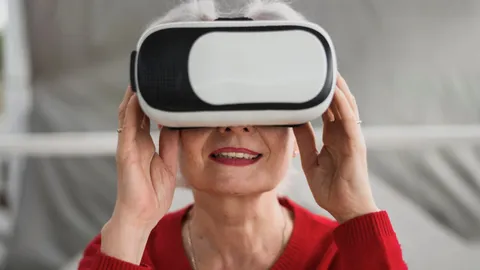
Virtual reality therapy to break the isolation of seniors – Clinical study of CHU in Nice
C2Care collaborated with CHU in Nice, as part of the “Bien Aging” project, on a clinical study integrating virtual reality with EHPAD residents. By relying on reminiscence therapy and personalized immersive content, the objective is to stimulate the autobiographical memory of seniors, improve their mood and break the isolation, particularly accentuated in people with mild to moderate cognitive disorders.
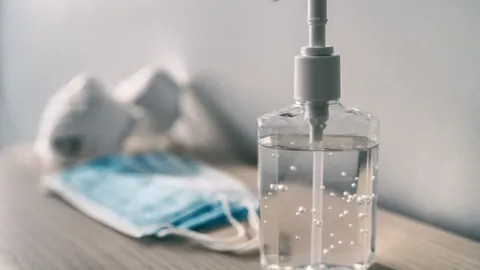
Virtual reality and hygiene: Protect your patients during your virtual reality sessions
For several months, the whole world has been facing the Covid-19 epidemic, causing concern and worry among the general population. It entails, on the one hand the risk of death due to viral infection, and on the other hand significant psychological pressure. Following government measures, in particular quarantine, the daily lives and habits of individuals have been disrupted. Several recent studies have highlighted the impact of these changes on the mental health of individuals, causing, among other things, an increase in depressive symptoms, anxiety and substance use disorders. In view of the psychological difficulties that the population faces, mental health professionals are on the front line in order to be able to offer psychotherapeutic care. The intervention of these professionals is essential, particularly with populations at risk: the elderly, who are more often socially isolated, people suffering from a psychiatric disorder as well as people suffering from depression, anxiety and substance use. However, the threat of a second wave of the pandemic is real, which is why compliance with health and hygiene rules is crucial.