
Formavenir, C2CARE and AP-HP revolutionize caregiver training with virtual reality and are finalists for the Sante Expo 2020 Innovation Trophies
The union of three experts gives rise to Caregivers Ré.V: serious game-type simulation training modules, using the immersive capacity of virtual reality to work on the soft skills of caregivers in the management of pain or the management of the aggressiveness of their patients. Supported by Formavenir, C2Care and the DMU Neurosciences du Kremlin-Bicêtre (AP-HP), this device is a finalist for the Santexpo 2020 Innovation Trophies, in the Human Resources category.
Key takeaways
- Ré.V Caregivers: virtual reality training modules designed by Formavenir, C2Care and the DMU Neurosciences du Kremlin-Bicêtre (AP-HP)
- Objective: work on the soft skills of caregivers in the face of pain and aggressiveness of patients
- Finalist of the Santexpo 2020 Innovation Trophies, Human Resources category
- Educational design based on health simulation, according to HAS recommendations
- Modules presented at the Salon Santexpo, Porte de Versailles, from October 7 to 9
Test our artificial intelligence for free and discover how it can support you on a daily basis.
The union of 3 experts to give birth to Ré.V caregivers : modules of training by serious game type simulation using the immersive capacity of virtual reality to work on the soft skills of caregivers in treating pain or managing the aggressiveness of their patients.
“Caregivers Ré.V” begins with the will of the DMU Neurosciences of Kremlin Bicêtre to work on the attractiveness of their services, in particular by offering more attractive, more relevant training, building their own professional healthcare identity allowing them to retain the loyalty of their professionals. And his meeting with:
- Educational expertise from a historic health training organization which supports the needs of healthcare organizations by utilizing all existing training palettes,
- The know-how of a start-up in the use of virtual reality in health and particularly in exposure to stressful and anxiety-provoking situations.
From this meeting, 3 innovations were born:
- The use of virtual reality in a new way in training: beyond good gestures and good practices, immersion in a stressful work environment allows you to work on the management of emotions and stress, while integrating good healthcare practices. These modules have been designed to be used in training sessions supervised by a trainer.
- Living lab type partnership between the first CHU from France, a historic organization in the sector and a start-up having introduced virtual reality into healthcare;
- Based on the field and the needs of service executives for the training of their caregivers: the latter were mobilized in the identification of priorities, the choice of exposure and simulation situations and the writing of scenarios. Each educational scenario offers dialogues and gestures of your choice, which lead to an improvement or deterioration in care, taken up in a debriefing accompanied by a trainer.
These three innovations are being honored by Santexpo 2020 by naming “Soignants Ré.V” a finalist for their Innovation Trophy in the Human Resources category.
Soignant Ré.V revolutionizes the training of caregivers
Serious game type, virtual reality training modules immerse the learner in a room, in which a patient awaits treatment. The dialogue engaged in is multiple choice, each choice of response (or gesture) influences the patient's behavior, attitude and responses, and decides the rest of the treatment scenarios.
The heart of the innovation lies in using the immersive capacity of virtual reality to work on emotion management. In fact, the patient expresses his annoyance or pain more or less strongly. The learner must therefore make the right gestures and choose the right words in a stressful environment. This module allows them to learn to manage their own stress, recognize possible triggers of their own aggression and manage their emotions to adopt an appropriate posture for treatment.
A 3D scanner was used to scan a hospital room to create a highly realistic virtual environment. Actors played the different scenarios, making it possible to transcribe the tones, attitudes, behaviors and gestures of anxious, painful or aggressive patients.
In terms of educational design, it is the use of the health simulation method which guided the design and writing of educational scenarios and debriefings. According to the HAS recommendations, three principles framed this design:
- That of the reflexive and positive relationship with the error: the error in the secure framework of the simulation makes it possible to fuel a debriefing;
- Reiteration and training to anchor know-how and develop “soft skills” necessary for the peaceful exercise of nursing functions in the changing environments that are healthcare establishments;
- By guaranteeing the principle of “never the first time on the patient”.
About DMU Neurosciences: https://www.aphp.fr/service/service-01-010
About Formavenir
The union of 3 experts to give birth to Caregivers Ré.V: serious game-type simulation training modules using the immersive capacity of virtual reality to work on the soft skills of caregivers in the management of pain or the management of the aggressiveness of their patients.
Since 1980, FORMAVENIR PERFORMANCES has supported more than 22,000 professionals in the health, social and medico-social sectors each year in improving their practices and increasing their skills as part of continuing professional training.
Established nationally and in the heart of the territories, Formavenir puts its solid experience in health, its network of more than 1,200 field trainers and its expertise in educational engineering at the service of healthcare professionals.
In 2017, Formavenir founded the Avenir Santé Formation Group through a merger with other training organizations in the sector to accelerate its training innovation initiatives.
About C2Care
C2Care, it is above all the story of a strong friendship between its two co-founders, Romain Streichemberger and Pierre Gadea. The compelling need to be useful, coupled with meeting a doctor specializing in the treatment of phobias via virtual reality, encourages them to use their know-how to improve existing devices and contribute to treating people.
Around this idea was born the deployment of an expert team made up of academics and health professionals to build the most complete virtual reality exposure therapy solution on the market.
Convinced that everyone's well-being depends above all on easy access to quality care, they are keen to develop solutions that facilitate this access and improve the care of each patient.
Would you like to come and test these new innovations? Meet our teams? We look forward to meeting you at the Santexpo Show, Hall1 stand T52, which will be held in Paris on October 7, 8 and 9 at Porte de Versailles.

C2Care, a leader in immersive technologies for mental health
Create your free account to explore over 250 virtual reality exposure situations and subscribe directly online.
FAQ
Why use virtual reality in the field of mental health?
Virtual reality allows graduated and controlled exposure to anxiety-provoking situations, in a secure setting. Immersive environments are repeatable, ensuring consistent support. The patient remains engaged and the practitioner can personalize each exercise according to their needs.
What pathologies can be treated in virtual reality?
Virtual reality treats anxiety disorders (phobias, post-traumatic stress, obsessive-compulsive disorders), addictions, mood disorders and is also used in cognitive remediation. The choice of environment depends on the disorder and the protocol defined by the practitioner.
Who can use virtual reality for treatment?
Practitioners such as psychologists, psychiatrists or occupational therapists use virtual reality to support their patients in the treatment of anxiety disorders and phobias. Health establishments, such as CHU, hospitals, clinics or nursing homes, also integrate these devices into their care protocols.
Can I feel nauseous while using the headset?
Some people may experience cybersickness when using a virtual reality headset: a sensation similar to motion sickness, linked to immersion. This phenomenon, documented in the literature, concerns approximately 10% of users of virtual reality devices.
Do I have access to all environments?
Yes, all C2Care environments are grouped into a single application. You therefore do not need to install several software programs to access the different scenes offered.
Who should I contact if I have software problems?
The C2Care technical service can be reached via live chat from your control platform. In the event of a breakdown, a diagnosis is carried out with you, and the defective equipment is replaced within 48 hours if necessary.
What pathologies can be treated in virtual reality?
Virtual reality is used in the treatment of anxiety disorders, phobias (social, aviophobia, arachnophobia, etc.), generalized anxiety disorder, obsessive-compulsive disorders, addictions, post-traumatic stress disorder and cognitive disorders.
Can I feel nauseous while using the headset?
Some users experience cybersickness, a sensation similar to motion sickness, which affects around 10% of people exposed to virtual reality. The practitioner can adapt the duration and intensity of the session to limit this discomfort.
Who can use virtual reality for treatment?
Virtual reality devices are aimed at practitioners: psychologists, psychiatrists and occupational therapists, working in offices or health establishments (CHU, hospitals, clinics, nursing homes, post-acute care and rehabilitation establishments).
As a therapist, what are the advantages of equipping yourself with virtual reality devices?
Virtual reality offers a graduated exposure and reproducible, adaptable to each patient. It reinforces therapeutic engagement thanks to its immersive nature and makes it possible to work on varied scenarios that are difficult or costly to reproduce in vivo exposure.
Do I have access to all environments?
Yes, all the environments offered by C2Care are grouped into a single application. The practitioner thus accesses the entire catalog of scenes from the same platform, without additional installation.
Who should I contact if I have software problems?
The technical service can be reached via live chat from the control platform. If there is a problem with the headset, a diagnosis is made with you and the defective equipment is replaced within 48 hours if necessary.
Which patients can benefit from a VRET?
Patients suffering from anxiety disorders, phobias (social, aviophobia, agoraphobia, etc.), obsessive-compulsive disorders, addictions or post-traumatic stress disorder can benefit from virtual reality exposure therapy, under the supervision of a practitioner.
References
- item
About DMU Neurosciences
AP-HP
View - item
Formavenir revolutionizes the training of caregivers through an unprecedented use of virtual reality
Formavenir Performances
View
Author
C2Care
Related articles

National Hypersensitivity Day
This day is an opportunity to revalue hypersensitivity. Launched by Saverio Tomasella, it helps to better inform managers on the characteristics and modalities of hypersensitivity. They represent a quarter of the population, there are almost 10 million in France. We must therefore now take into account the specific problems of hypersensitive people and their place in society.

The mental load
You've probably already heard about mental load. But do you really know what that represents?
Virtual reality and social skills training with researchers from Aix-Marseille University.
A doctoral student in psychology in the Social Psychology Laboratory at the University of Aix-Marseille, I work with Dr Del-Monte, Ms Fauvarque, and Professor Graziani on virtual reality in the therapeutic context. In this context, I have had the pleasure of working for 3 years with C2Care software. The plurality and personalization of environments allowed me to have the freedom to direct my research in the desired direction without technological barriers.
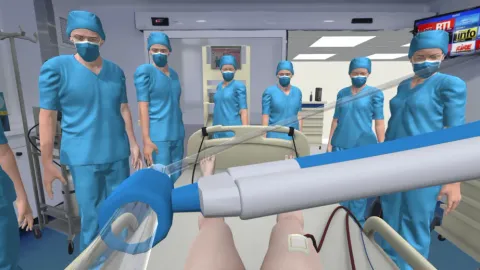
A world first: virtual reality for lung transplantation
For the first time in the world, a patient on the lung transplant list will be able to benefit from therapeutic virtual reality sessions to prevent post-operative psychological trauma, thanks to the unprecedented partnership between C2Care and AP-HM (Public Assistance – Marseille Hospitals).
Depression in the elderly
In recent years, the use of VR in geriatrics has grown considerably. As Mathias et al reported in a 2019 literature review, VR has become an effective tool for the screening and treatment of cognitive disorders, while it has also found uses in the treatment of Alzheimer's disease. The use of VR in treating mood disorders and other forms of depression in older adults has lagged, but there is reason to believe that it will be the next frontier in treating mental health disorders among older Americans. VR has been used with great success in the treatment of ADHD, anxiety and depression in adolescents and young people, leading many geriatric specialists to see exciting potential for older age groups. So let’s take a closer look at how this technology could be applied, and what kind of benefits older people can expect from it.