
C2Care serving patients in intensive care
C2Care collaborated with the North Hospital of Marseille (AP-HM) as well as with Maryse Pour la Vie with the aim of preparing patients for their stay in the intensive care unit following a lung transplant operation. The very first patient to have contributed to this study was exposed before her operation. The results obtained are very positive.
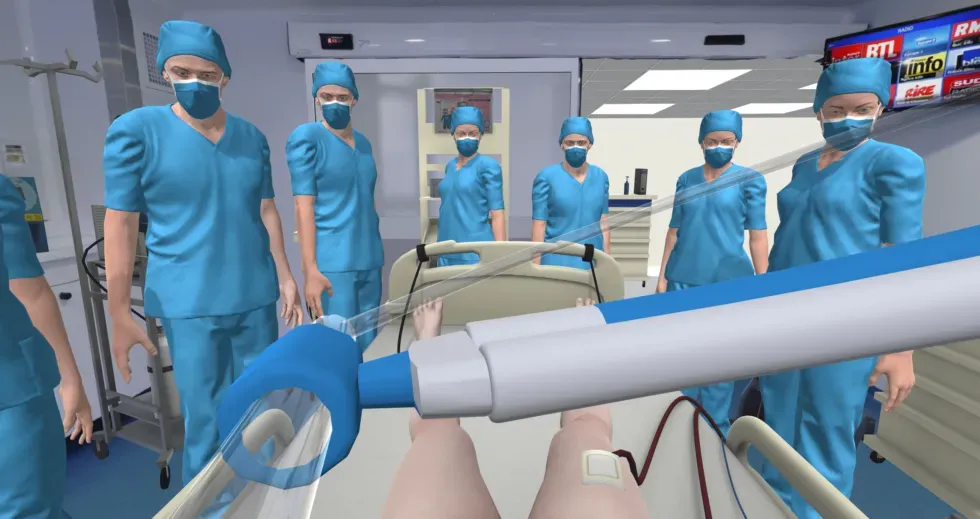
Key takeaways
- C2Care collaborated with AP-HM and Maryse Pour la Vie to prepare patients for stay in intensive care after a lung transplant.
- A first patient was exposed to the C2Care software before her operation, accompanied by Dr. Maltese.
- The results are positive: the patient woke up “without surprise” after the operation.
- The AI assistant Camille accompanies patients without judgment during exposures.
- C2Care thanks the Nord Hospital, Maryse Pour la Vie, Dr. Coiffard and Dr. Maltese.
VIRTUAL REALITY WITHIN THE RESUSCITATION DEPARTMENT
C2Care collaborated with the Nord Hospital of Marseille (AP-HM) as well as with Maryse Pour la Vie with the aim of preparing patients for their stay in the intensive care unit following a lung transplant operation.
The very first patient to have contributed to this study was exposed before her operation. The results obtained are very positive.
The stay in intensive care is an ordeal that is too rarely experienced well by patients. The physical and psychological shock, but also the general world of resuscitation are often traumatic. This traumatic experience, if too deafening, will have a considerable impact on the length of stay and possible complications. This is why this study was set up, to reassure, support, relieve patients and nursing staff in intensive care.
Before her operation, the patient was exposed to the C2Care software accompanied by Dr. Maltese for total immersion. Thanks to these exposure situations and the work of the psychologist, she was able to prepare for the stay in intensive care, meet the caregivers and discover the machines that would support her in her recovery. The goal is to minimize the traumatic impact once the patient begins her stay.
“Once the operation was finished, I woke up with no surprises.” These are his words. The results are promising and we are eager to evolve this project and develop this study in order to support new patients and establishments.
C2Care thanks the Nord Hospital and Maryse Pour la Vie as well as Dr. Coiffard and Dr. Maltese.
Think about it: organ, tissue, blood and bone marrow donations save lives every day.

C2Care, a leader in immersive technologies for mental health
Create your free account to explore over 250 virtual reality exposure situations and subscribe directly online.
FAQ about C2Care serving intensive care patients
How long has this existed?
C2Care has been testing its virtual reality software in hospitals since 2016. This experience has made it possible to develop the immersive environments used today, such as the collaboration with the North Hospital of Marseille to prepare patients for a stay in intensive care.
What is a virtual environment?
A virtual environment is an immersive scene reproducing a real situation, such as an intensive care unit, an airplane or an elevator. C2Care offers more than 250 environments grouped in a single application, accessible to the patient via a virtual reality headset.
Can virtual reality be dangerous?
No, it is used under the supervision of the practitioner who gradually adjusts the intensity of the stimuli. Some patients may experience cybersickness (nausea, visual discomfort), which affects approximately 10% of people exposed to headphones.
What pathologies can be treated in virtual reality?
Anxiety disorders (phobias, post-traumatic stress, obsessive-compulsive disorders), addictions and mood disorders can be treated in virtual reality. It is also used in cognitive remediation, as a complement to cognitive-behavioral therapies.
Can I feel nauseous while using the headset?
Cybersickness (nausea, visual discomfort) may occur in some patients when using a virtual reality headset. It concerns approximately 10% of exposed people; the practitioner then adjusts the exposure.
Who can use virtual reality for treatment?
Practitioners such as psychologists, psychiatrists and occupational therapists use virtual reality to support their patients. More than 1000 practitioners are now equipped with C2Care devices in nearly 50 countries.
As a therapist, what are the advantages of equipping yourself with virtual reality devices?
Progressive and controlled exposure allows the intensity of the stimuli to be adjusted to each patient. Reproducible environments ensure consistent care, while the immersive aspect promotes patient engagement and adherence to treatment.
Which patients can benefit from a VRET?
Patients suffering from anxiety disorders, phobias or post-traumatic stress can benefit from virtual reality exposure therapy. C2Care also uses it to prepare patients for hospitalization, such as during a lung transplant before a stay in intensive care.
As a therapist, what are the advantages of equipping yourself with virtual reality devices?
Virtual reality offers progressive and controlled exposure, repeatable scenarios and increased patient engagement in their therapy. It also allows personalized care, adjusted to the specific needs of each patient.
Do I have access to all environments?
Yes, all our environments are grouped into a single application.
Who should I contact if I have software problems?
Our technical service can be reached via live chat from your control platform. If there is a problem with the VR headset, we will establish a diagnosis with you in order to understand your difficulty and find a solution. If necessary, we will provide you with a return label and replace the defective equipment within 48 hours.
Which patients can benefit from a VRET?
Patients suffering from anxiety disorders, phobias, addictions, obsessive-compulsive disorders or post-traumatic stress disorder can benefit from virtual reality exposure therapy, as part of follow-up with a practitioner.
Author
C2Care
Related articles

Hygiene and dietetic rules
In the context of anxiety (phobias, OCD, GAD) today we will discuss health and diet rules. These rules are intended to provide advice on lifestyle habits. These rules go very well with the therapeutic elements that you are going to teach him
Formavenir, C2CARE and AP-HP revolutionize caregiver training with virtual reality and are finalists for the Sante Expo 2020 Innovation Trophies
The union of three experts gives rise to **Caregivers Ré.V**: serious game-type simulation training modules, using the immersive capacity of virtual reality to work on the soft skills of caregivers in the management of pain or the management of the aggressiveness of their patients. Supported by Formavenir, C2Care and the DMU Neurosciences du Kremlin-Bicêtre (AP-HP), this device is a finalist for the Santexpo 2020 Innovation Trophies, in the Human Resources category.
Virtual reality therapy to break the isolation of seniors – Clinical study of CHU in Nice
C2Care collaborated with CHU in Nice, as part of the “Bien Aging” project, on a clinical study integrating virtual reality with EHPAD residents. By relying on reminiscence therapy and personalized immersive content, the objective is to stimulate the autobiographical memory of seniors, improve their mood and break the isolation, particularly accentuated in people with mild to moderate cognitive disorders.
A world first: virtual reality for lung transplantation
For the first time in the world, a patient on the lung transplant list will be able to benefit from therapeutic virtual reality sessions to prevent post-operative psychological trauma, thanks to the unprecedented partnership between C2Care and AP-HM (Public Assistance – Marseille Hospitals).
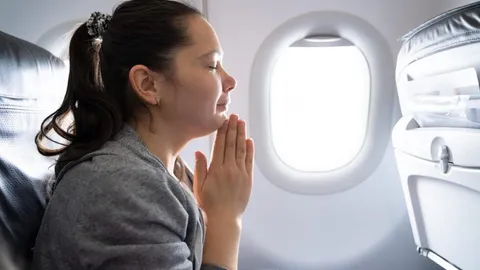
What is a phobia?
Phobos is the incarnation of fear, he followed his father on the battlefields. The panicky fear that he triggered at the mere sight of him reflects what a person feels when confronted with the object of their fear. There are many phobias and some are more well known than others, including agoraphobia and claustrophobia. On the other hand, aviophobia is less so as it affects many of those who would also dream of discovering fine sandy beaches.