
Virtual nature, real well-being
Regular exposure to nature is an integral component of good mental health. The sun, greenery, and wind are all elements that contribute to good psychological balance and a better quality of life. However, certain unforeseen events in life sometimes prevent us from fully enjoying these benefits. Highlighting an alternative solution to allow as many people as possible to enjoy nature: virtual nature.
Key takeaways
- virtual nature imitates natural environments through visuals and sounds, in 360° photo/video realism or in synthetic images.
- It activates the limbic system, producing an emotional impact close to real nature: relaxation, reduction in anxiety and stress.
- Target groups: people in urban areas, immobilized people, neurodegenerative pathologies, chronic anxiety and depression, palliative care, quality of life at work.
- It does not replace real nature but facilitates access to its benefits when these are limited.
1. WHAT IS VIRTUAL NATURE?
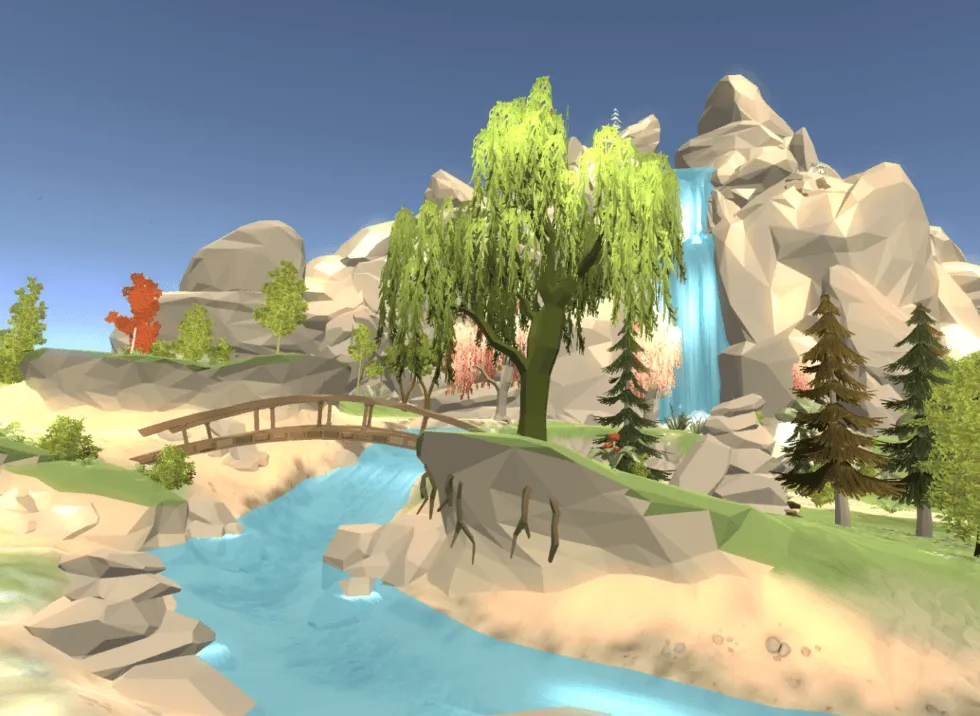
Virtual nature is the use of digital environments imitating nature using visuals and sounds to immerse a person in a life-like experience. This virtual nature can be very realistic, with the use of 360° photos or videos, or more fanciful, with the use of computer-generated images and 3D models, which allow greater creative freedom as well as offering experiences impossible to live otherwise.
Forests in autumn, scuba diving or even a trip into space, virtual reality provides access to a very wide range of enriching experiences on cognitive and emotional levels. The environments can be fixed or offer movement within the environment, to adapt to the needs and limits of each patient.
2. HOW DOES RELAXATION IN VIRTUAL REALITY WORK?
When exposed to virtual reality environments, the limbic system, responsible for emotional interpretation of the environment, activates more quickly than evolutionarily newer parts. This allows an emotional impact close to reality, if not equal.
Thanks to this phenomenon, it is possible to use this tool to provide experiences that can be valuable in regulating the emotional state of an individual.
Thus, thanks to this operation, virtual nature presents the same positive effects as real nature. It helps to bring about a state of relaxation, reduce symptoms of anxiety, better manage stress, reduce agitation and increase the perception of well-being.
3. WHO CAN BENEFIT FROM VIRTUAL NATURE?
Virtual nature can benefit everyone, but it may be particularly recommended for certain audiences:
- People in urban areas, who often have fast paced and stressful lives, as well as limited access to nature, despite increasing vegetation in these spaces. Virtual nature allows you to quickly enjoy the benefits of nature, on a regular basis, to relieve everyday stress.
- Immobilized people, who cannot have access to real nature. Virtual reality allows you to bring the benefits of nature, but also to work on exploration and pleasure, to combat the depressive symptoms that can accompany prolonged immobilization.
- People suffering from neurodegenerative pathologies, particularly when they present behavioral disorders, agitation or wandering. These symptoms are reduced by exposure to nature and travel, and virtual nature offers a solution that is easy to access and use, both at home and in a specialized establishment.
- People suffering from chronic anxiety and depression, pathologies for which exposure to nature has been shown to be extremely beneficial. However, these disorders have a significant impact on psychomotor functioning, which makes access to treatment and helping elements difficult. Virtual reality allows easier first access to nature, which helps to reduce the symptoms of anxiety, anhedonia and can contribute to behavioral reactivation, necessary for treatment.
- The virtual nature is also an asset during palliative care. It helps relieve anxiety and the pain of illness, as well as offering experiences of exploration and wonder in a difficult context.
- In an approach to quality of life at work, virtual nature can help reduce stress in a professional context, by offering moments of break and relaxation. In addition to promoting good mental health among employees, this practice helps increase productivity and well-being at work.
And many other situations. Virtual nature and relaxation in virtual reality are versatile solutions that can be easily applied to many situations, with high acceptability and very few contraindications.
4. AND THE TRUE NATURE IN ALL THIS?
It is clear that regular access to real natural environments remains the ideal solution and should be part of everyone's lifestyle. However, as we have seen, this access is not always easy or possible. This tool is not intended to replace nature with screens, a rather frightening dystopian scenario. The objective is really to facilitate access to a valuable mental health resource for people who live with many barriers to taking full advantage of it.
The COVID crisis of recent years has highlighted the potential difficulties associated with confinement and lack of contact with nature. The virtual nature opens up a field of possibilities in accompaniment and support for well-being and mental health in a greater number of difficult conditions.
C2Care, a leader in immersive technologies for mental health
Create your free account to explore over 250 virtual reality exposure situations and subscribe directly online.
Virtual Nature and Wellness FAQ
Why use virtual reality in the field of mental health?
Virtual reality allows graduated exposure to anxiety-provoking stimuli in a secure setting, with identically reproducible scenarios. It promotes patient engagement and personalized care, adapted to anxiety disorders, addictions, mood disorders and cognitive remediation.
How long has this existed?
C2Care has been testing its virtual reality software in hospitals since 2016. This field experiment, carried out with practitioners, made it possible to refine the environments offered and gradually expand the catalog of scenes available to support a greater number of anxiety and cognitive disorders.
Can virtual reality be dangerous?
Virtual reality has very few contraindications and high acceptability among patients. Some people may experience cybersickness, a discomfort linked to immersion, which affects around 10% of users. The practitioner then adapts the duration and intensity of the exposure.
Can I feel nauseous while using the headset?
Mild discomfort, called cybersickness, may occur in approximately 10% of people using a virtual reality headset. It manifests itself as nausea or temporary disorientation. The practitioner can adjust the session to limit this phenomenon.
Do I have access to all environments?
Yes, all C2Care environments are grouped into a single application. This gives you access to the entire catalog of available scenes, without additional installation, to adapt each exposure to the patient's needs.
Who should I contact if I have software problems?
The C2Care technical service can be reached via live chat from your control platform. If there is a problem with the headset, a diagnosis is made with you, and the defective equipment is replaced within 48 hours if necessary.
Who can use virtual reality for treatment?
Virtual reality is used by practitioners such as psychologists, psychiatrists and occupational therapists, within health establishments (CHU, clinics, nursing homes, post-acute care establishments) or in private practice, to support their patients.
What pathologies can be treated in virtual reality?
Virtual reality is used in the treatment of anxiety disorders (phobias, post-traumatic stress, obsessive-compulsive disorders), addictions, mood disorders, and in cognitive remediation. The practitioner chooses the environment and intensity of exposure adapted to each patient.
Author
C2Care
Related articles
Pessimism
“Stop always being pessimistic!” Have we often repeated this type of sentence to you? Pessimism is something we can all experience at certain times in our lives. However, some of us will be too pessimistic or even maladaptive, which will have an impact on our personal and professional lives.
Better understand Attention Deficit Disorder (ADHD)
It is a disorder that we hear more and more about, with the impression, sometimes, that it is thrown around indiscriminately. It remains one of the most common neurodevelopmental disorders, which the constant improvement of diagnostics is bringing to light. However, it remains too little known in its operation and presentation. Shedding light on ADHD and what this acronym means.
Mindfulness meditation
When we are overwhelmed by our thoughts, mindfulness meditation is a breath of fresh air to find our bearings.
Workaholism: addiction to work
Workaholism or “boulomania” in French refers to work addiction. Unlike many other addictions, its symptoms such as presenteeism (presence at work even when one should not) or overinvestment in work are often valued in companies, which makes it more insidious and difficult to treat than the majority of addictive disorders. However, as with all addictive behaviors, it exposes affected people to very significant risks for their health (hyperstress, burnout, depression).
What is the impact of Covid-19 on mental health?
The Covid-19 pandemic has had a significant impact on mental health, between fear, isolation and financial distress. This article reviews the main psychological effects of the health crisis and therapeutic solutions, including virtual reality exposure therapy (VRET), to help patients cope.